
Non-Traditional Trademarks: Texture Marks

Non-traditional trademarks are unconventional and unique forms of trademarks. Non-traditional trademarks are less common than traditional trademarks (and certification marks and collective marks) but provide a creative and innovative way for businesses to establish and protect their brand identities.
The largest category of non-traditional trademarks is trade dress, which includes the overall look and feel of a product, product packaging, or service. Trade dress can include color marks, configuration marks, position marks, repeating pattern marks, shape marks, and texture marks. Other (non-trade dress) types of non-traditional trademarks include hologram marks, motion marks, scent marks, sound marks, and taste marks.
A texture mark protects distinctive texture(s) associated with a brand. Whereas some of the previous types of trademarks we have discussed protect the visual appearance of a good or service, a texture mark protects the touch and feel of a good. A texture mark is also sometimes referred to as a touch mark or a tactile mark. In order to register as a trademark, the texture must be non-functional and distinctive, and the trademark owner must provide evidence that the texture mark is recognized by consumers to be a trademark.
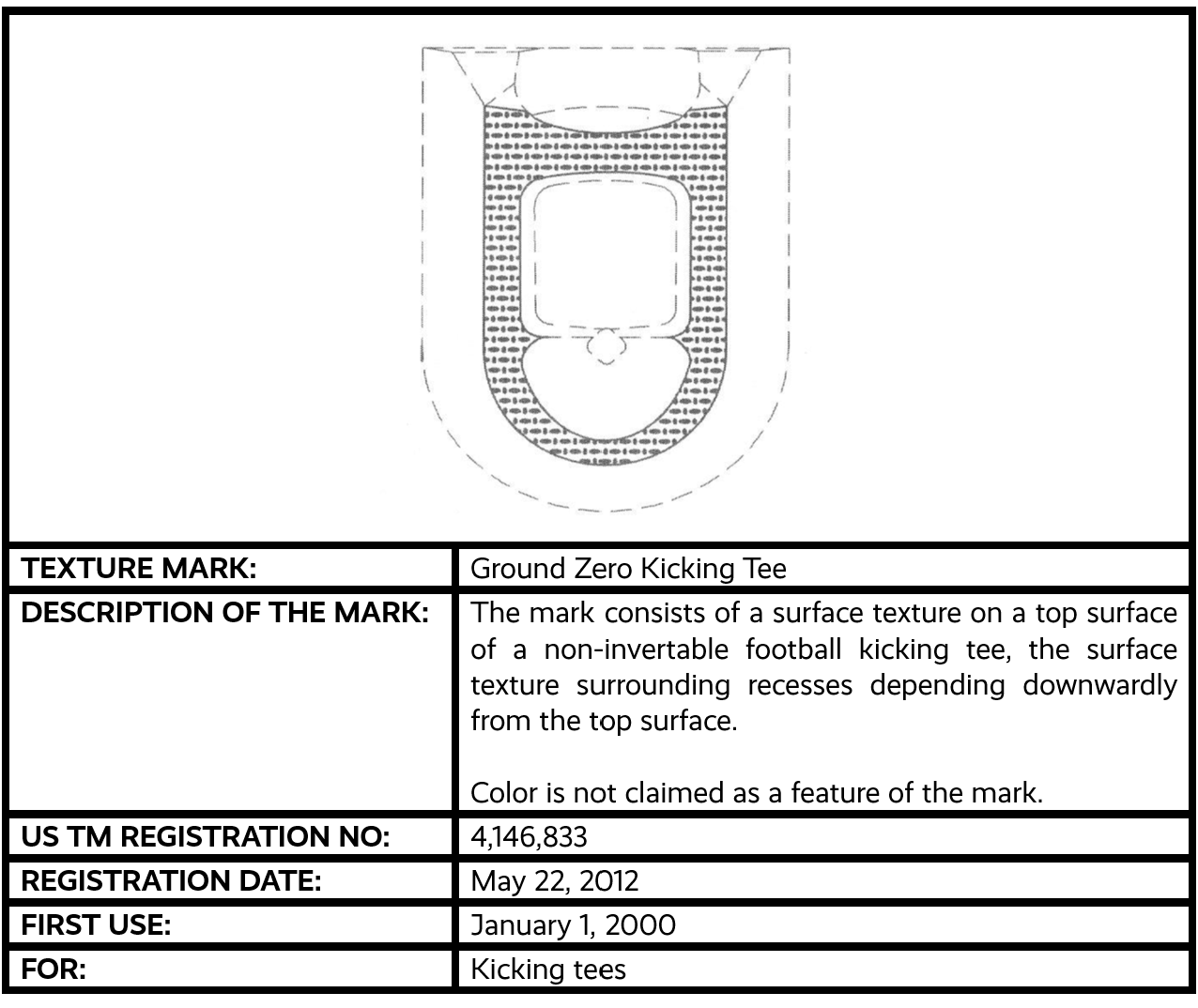
Texture trademarks are rare and difficult to register. A few trademark registrations directed towards only a texture mark include the Gerber Gator Knife texture mark [1], first used in 1991 and first registered in 2007 for sports knives, hunting knives and survival knives; and the Ground Zero Kicking Tee texture mark [2], first used in 2000 and first registered in 2012 in connection with kicking tees.
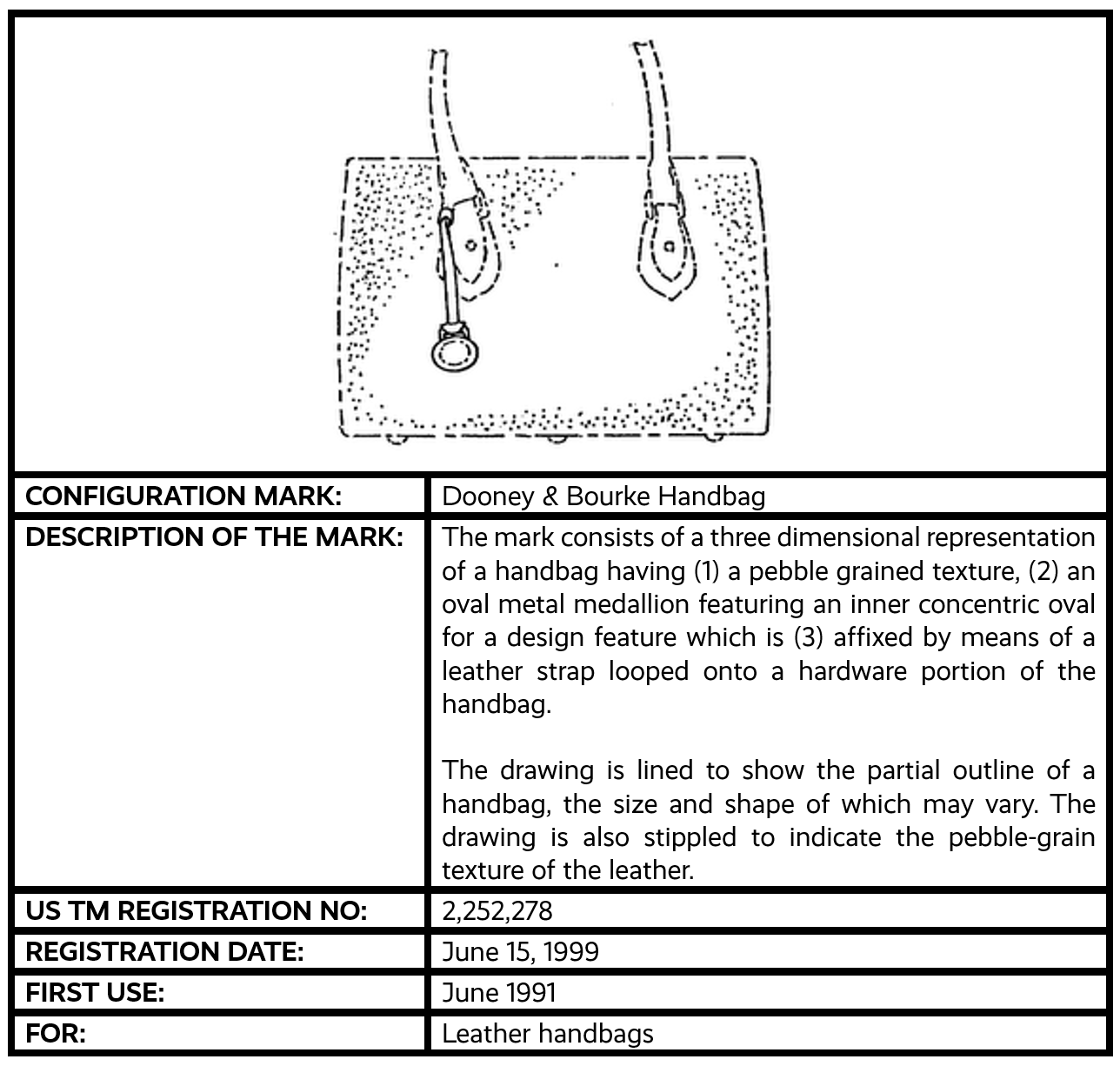
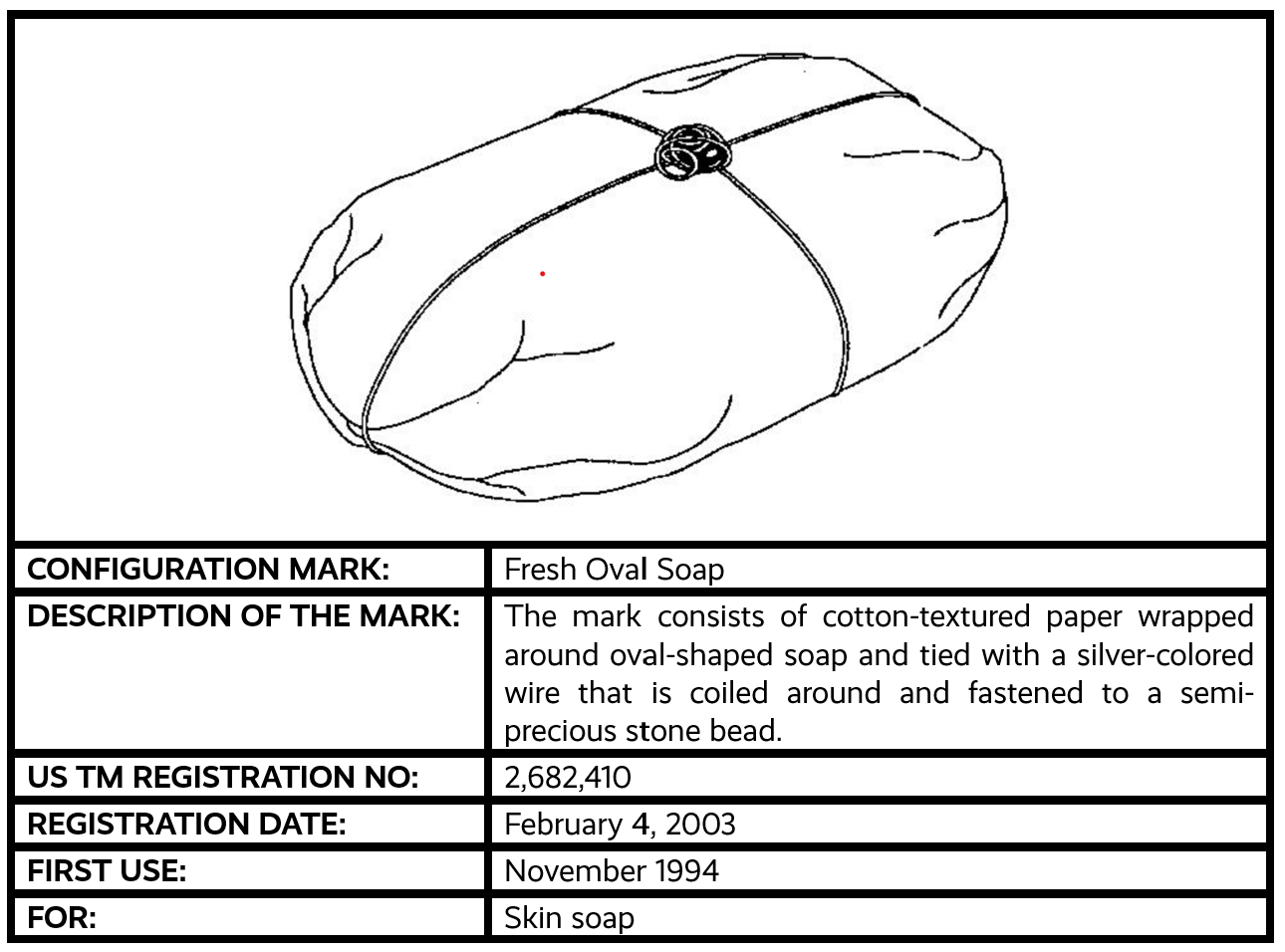
More commonly, texture marks are registered as part of an overall configuration mark covering both visual and tactile features of a good. Two example trademark registrations include the Dooney & Bourke Handbag configuration mark [3], first used in 1991 and first registered in 1999 for leather handbags, and the Fresh Oval Soap configuration mark [4], first used in 1994 and first registered in 2003 in connection with skin soap.
Want to search for texture marks yourself? Head over to https://tmsearch.uspto.gov/, select “Field tag and Search Builder” from the drop down box on the left, and try the following search string: DE:(texture* touch* tactile*) AND LD:true AND RG:*principal*
Once you have search results, over on the left click on “Sort” and select “Serial (0-9)” to see texture marks sorted oldest to newest or “Serial (9-0)” to see texture marks sorted newest to oldest by filing date. Searching isn’t an exact science (thank you outdated trademark search tools!), so beware lots of false positives (especially with texture mark searching) and incomplete or missing results. Have fun!
Want to learn more about trademarks? Check out our posts on 5 Key Facts About Trademarks, Why Should I Care About Trademarks?, and “Intellectual” Property? Sounds Made Up.
Copyright © 2026 by Illustrated IP, LLC. All rights reserved.
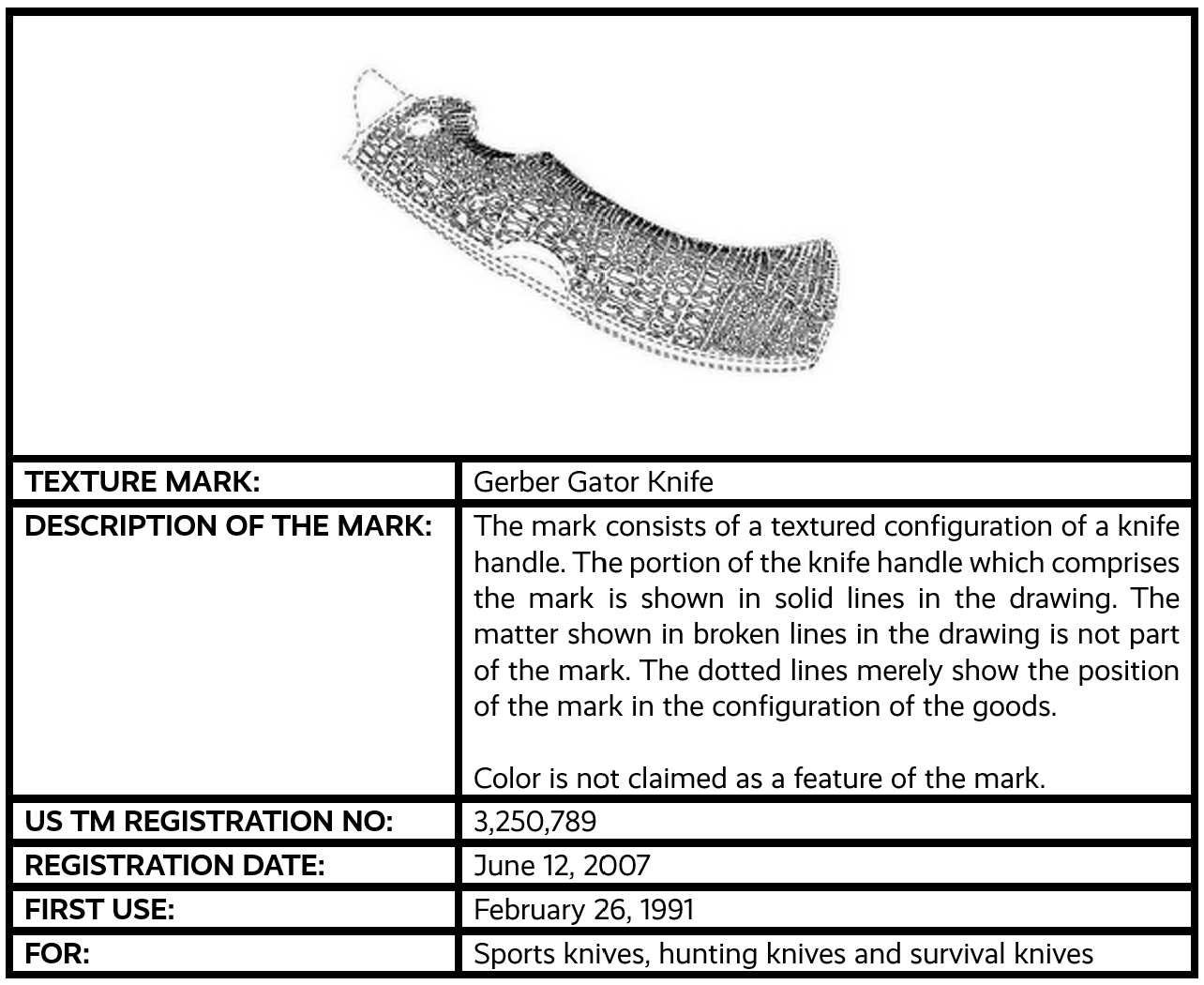
[1] USPTO, U.S. Trademark Registration No. 3,250,789, and available at https://tsdr.uspto.gov/#caseNumber=78768621&caseSearchType=US_APPLICATION&caseType=DEFAULT&searchType=statusSearch.
[2] USPTO, U.S. Trademark Registration No. 4,146,833, and available at https://tsdr.uspto.gov/#caseNumber=85504391&caseSearchType=US_APPLICATION&caseType=DEFAULT&searchType=statusSearch.
[3] USPTO, U.S. Trademark Registration No. 2,252,278, and available at https://tsdr.uspto.gov/#caseNumber=75135272&caseSearchType=US_APPLICATION&caseType=DEFAULT&searchType=statusSearch.
[4] USPTO, U.S. Trademark Registration No. 2,682,410, and available at https://tsdr.uspto.gov/#caseNumber=76173474&caseSearchType=US_APPLICATION&caseType=DEFAULT&searchType=statusSearch.