
Pennington Green Grass Seed
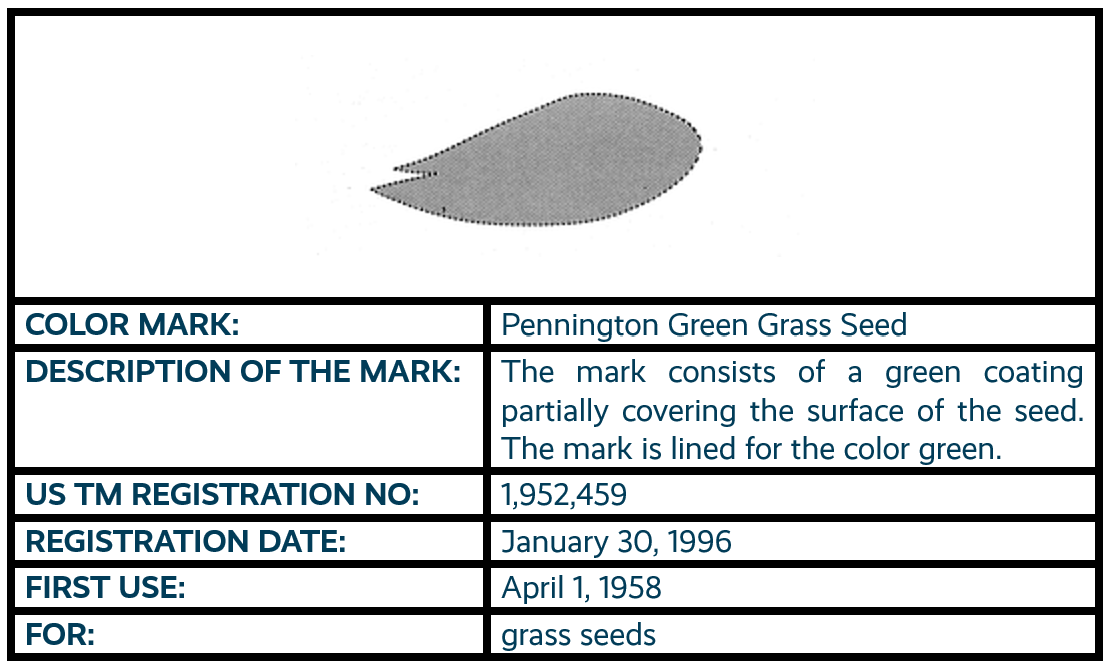
Trademark: Pennington Green Grass Seed
First Used: 1958
Registered: 1996
Current Owner: PENNINGTON SEED, INC. [1]
Trademark Type: non-traditional trademark; trade dress; color mark
Primarily Associated With: grass seeds [2]
Brief (and likely incomplete) History [3]:
Fall is here, which means homeowners across warmer parts of the country are getting ready to overseed their lawns for winter. In areas where warm-season grasses go dormant and turn brown, cool-season varieties like perennial ryegrass are often planted in the fall to keep lawns green through the cooler months.
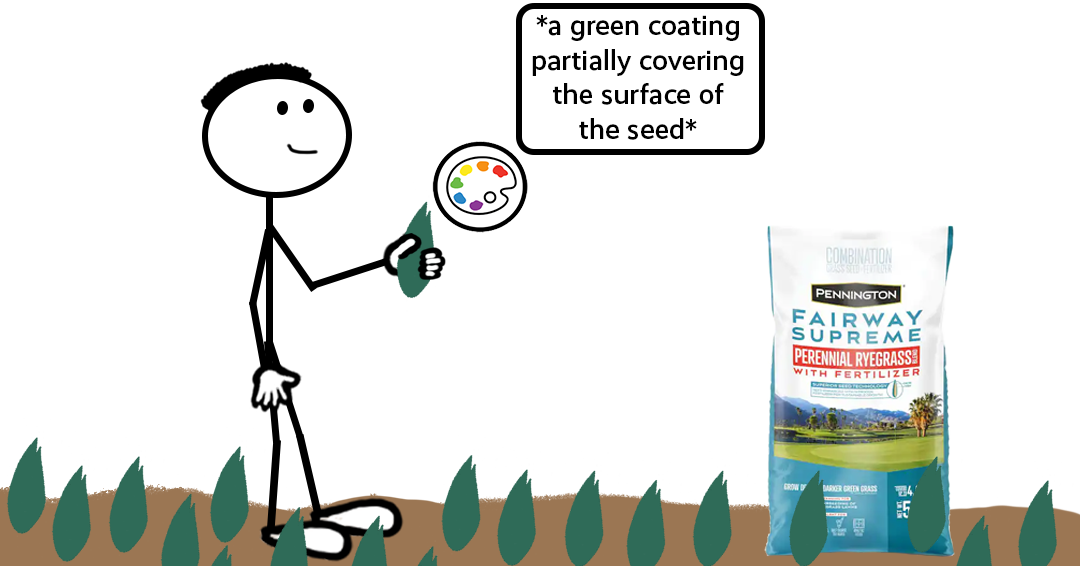
PENNINGTON® is one of the best-known brands lining store shelves during overseeding season, and as you load a bag into your cart or car this weekend, you may notice a striking statement printed on the back: “The color green as applied to grass seed is a registered trademark.” We know what you are thinking: “Really? A green trademark for grass seed that produces green grass?” That might seem unusual for a product associated so closely with green lawns, but grass seed itself usually is not green. Many common turfgrass seeds are naturally tan, yellowish-brown or brown. The green you see on Pennington seed comes from a coating applied during processing.
Pennington was founded in 1945, when Brooks Pennington Sr. opened a small feed and seed store on Main Street in Madison, Georgia. His son, Brooks Pennington Jr., eventually moved the business away from retail and into wholesale seed, selling cotton, soybeans and agricultural grasses throughout the Southeast. By the 1950s and 1960s, Pennington began looking beyond farms and pastures to the growing market for residential lawns. One of the company’s biggest opportunities came from Kentucky 31 tall fescue, a hardy grass traditionally used for pasture that Pennington helped introduce to homeowners as a durable, relatively low-maintenance lawn grass.
As Pennington expanded into lawn seed, it also began experimenting with ways to protect seeds during their most vulnerable stage of growth: when first spread and through germination. Their solution was a proprietary "Green Coat" treatment, covering seeds a growth stimulant along with fungicides and insecticides. That approach developed into their current Penkote seed technology, which further covers seeds with a protective coating. The green color serves a practical purpose too: it makes treated seed easier to see while planting and helps discourage birds from eating seed left exposed on the soil.
Copyright © 2026 by Illustrated IP, LLC. All rights reserved.
[1] Pennington, https://www.pennington.com/.
[2] USPTO, U.S. Trademark Registration No. 1,952,459, available at https://tsdr.uspto.gov/#caseNumber=74549352&caseSearchType=US_APPLICATION&caseType=DEFAULT&searchType=statusSearch.
[3] The History of Pennington Seed, PENNINGTON, available at https://www.pennington.com/all-products/grass-seed/resources/a-commitment-to-excellence-through-the-years-with-pennington-seed; Identify common species of forage, OREGON STATE UNIVERSITY, available at https://forages.oregonstate.edu/nfgc/eo/onlineforagecurriculum/instructormaterials/availabletopics/plantid/identifyforages; Griffin daily news., September 01, 1967, Page 2, Image 2, GEORGIA HISTORIC NEWSPAPERS, available at https://gahistoricnewspapers.galileo.usg.edu/lccn/sn83009936/1967-09-01/ed-1/seq-2/.