
Nintendo Handheld Consoles

Trademark Topic: Nintendo Handheld Consoles
First US Release: April 28, 1980
Current Owner: NINTENDO OF AMERICA INC. [1]
Trademark Type: non-traditional trademark; trade dress; configuration mark
Brief (and likely incomplete) History [2]:
Nintendo has a long and storied history (first starting with playing cards!) and has released some of the most famous home consoles and handheld consoles in history. Let’s take a look at major releases of Nintendo handhelds (and some non-traditional trademark registrations!).
Game & Watch (1980)
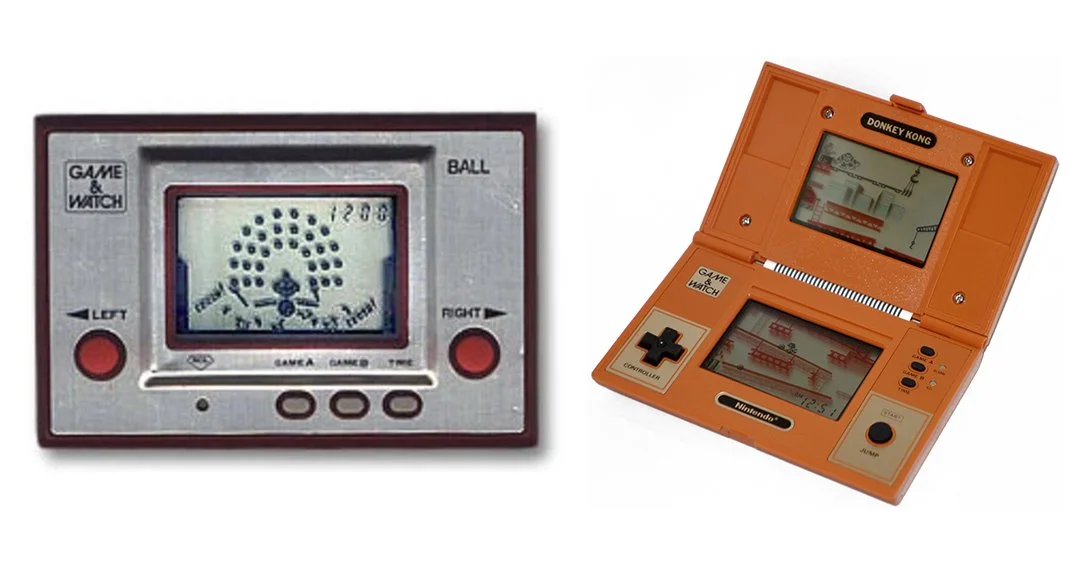
Did you know the Game Boy was not Nintendo’s first handheld console? Before the Game Boy’s pixelated green screens took over the world, Nintendo released the Game & Watch on April 28, 1980. Each Game & Watch unit featured a single LCD game and a digital clock—an innovative blend of entertainment and practicality. These compact devices were wildly popular and introduced the D-pad, a control innovation that would become standard on future consoles.
Game Boy (1989)
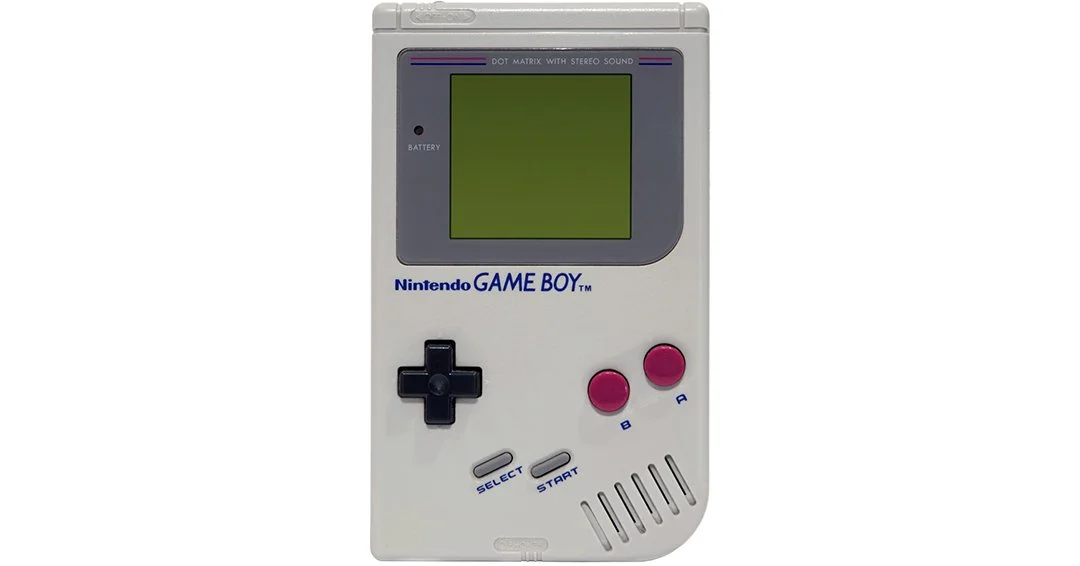
Of course, everything changed when the Game Boy was launched on July 31, 1989. It was portable, durable, and paired perfectly with Tetris, a bundled title that helped the Game Boy achieve instant success. That combination turned handheld gaming from a novelty into a habit, and the Game Boy line (Game Boy, Game Boy Pocket, and Game Boy Color models) went on to sell 118.69 million units worldwide.
Virtual Boy (1995)
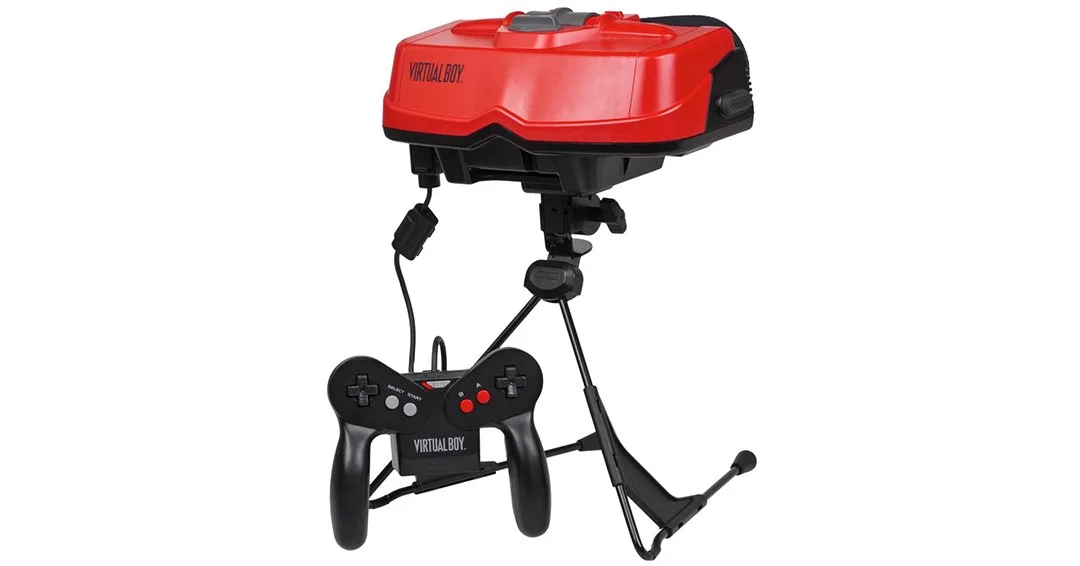
As it has done repeatedly throughout the company’s existence, Nintendo decided to take a massive swing with its next handheld, this time by bringing 3D gaming to a portable format. Unfortunately, it was also a massive miss. The Virtual Boy was a 32-bit “Virtual Immersion” system and later called a stereoscopic 3D system with a display in an eyepiece. The idea was bold, but the machine never caught on commercially. It was released in 1995 and discontinued within a year, selling only 770,000 units worldwide during its brief lifespan (making it Nintendo's lowest-selling standalone console).
Game Boy Color (1998)
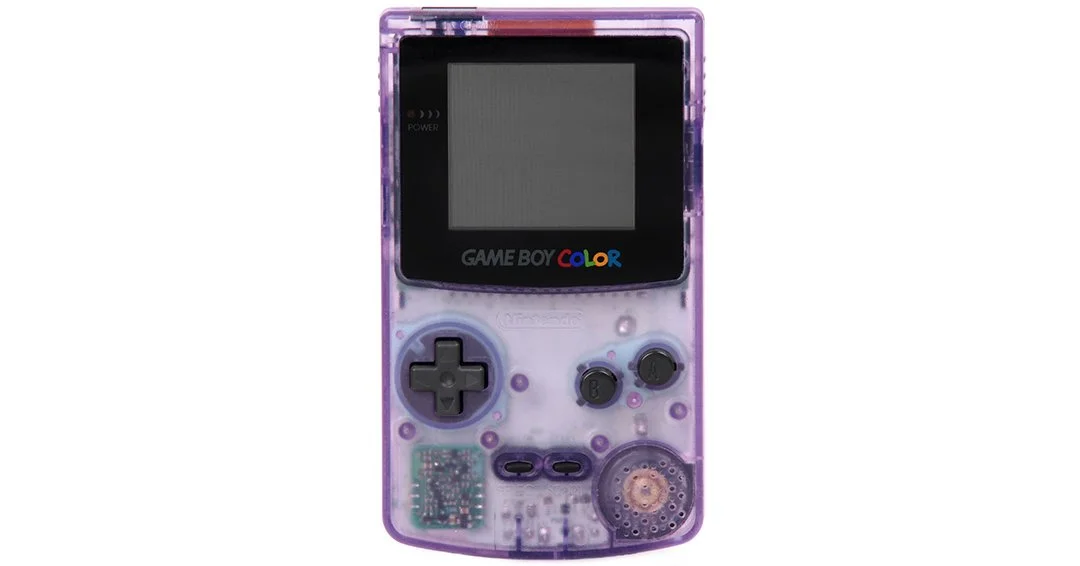
Nintendo rebounded with the Game Boy Color in 1998. The company’s first color handheld console could display more than 32,000 possible colors and offered twice the processing power of the original monochrome Game Boy, while still remaining compatible with earlier Game Boy games. It was not a total reinvention, but it was exactly the kind of smart upgrade Nintendo needed after the failure of the Virtual Boy.
Game Boy Advance (2001)
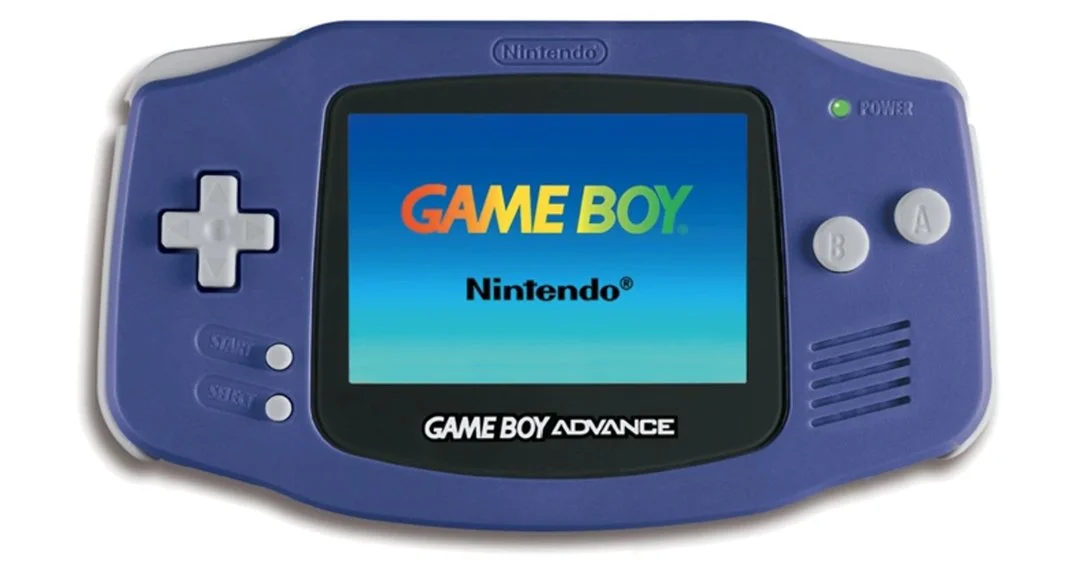
Just three years later, Nintendo released a major leap in handheld gaming. The Game Boy Advance was a 32-bit handheld with an intuitive design, a brighter, wider screen, and “console-quality gaming in your pocket.” It also kept backward compatibility with Game Boy and Game Boy Color games, so players could bring their old libraries with them while stepping into a more powerful generation of portable play. Showing that the Game Boy brand still carried major clout with consumers, the Game Boy Advance sold 81.51 million units worldwide.
Nintendo DS (2004)
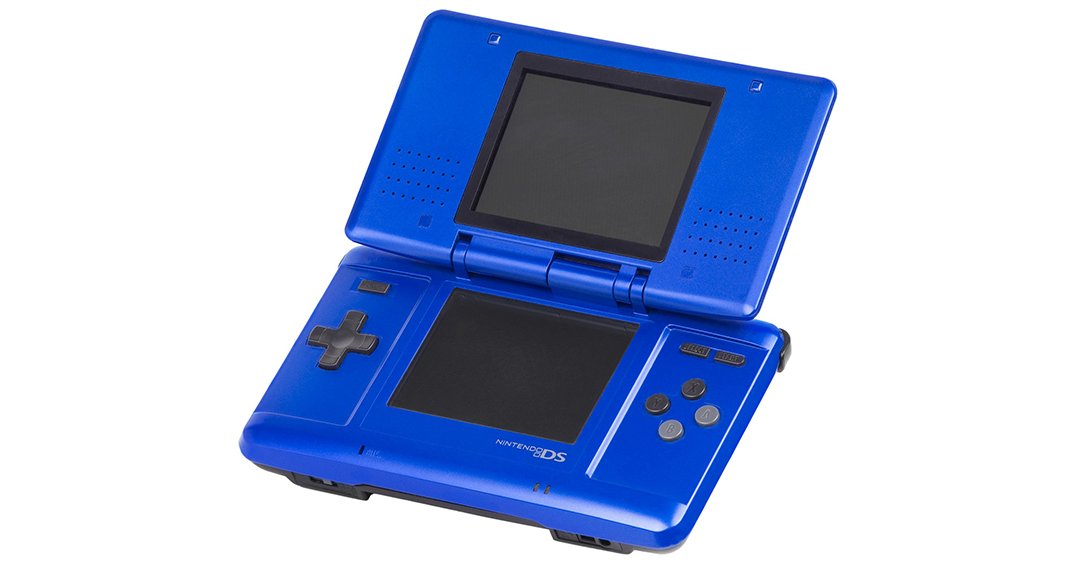
In 2004, Nintendo introduced the Nintendo DS and again broke new ground in the handheld market. Its hook was simple: two screens (DS was short for dual screen), touch controls, wireless multiplayer, and backward compatibility with Game Boy Advance titles. This was one swing by Nintendo that became a monster home run, with the DS family selling 154.02 million units worldwide, making it one of the best-selling game systems ever.
Nintendo 3DS (2011)
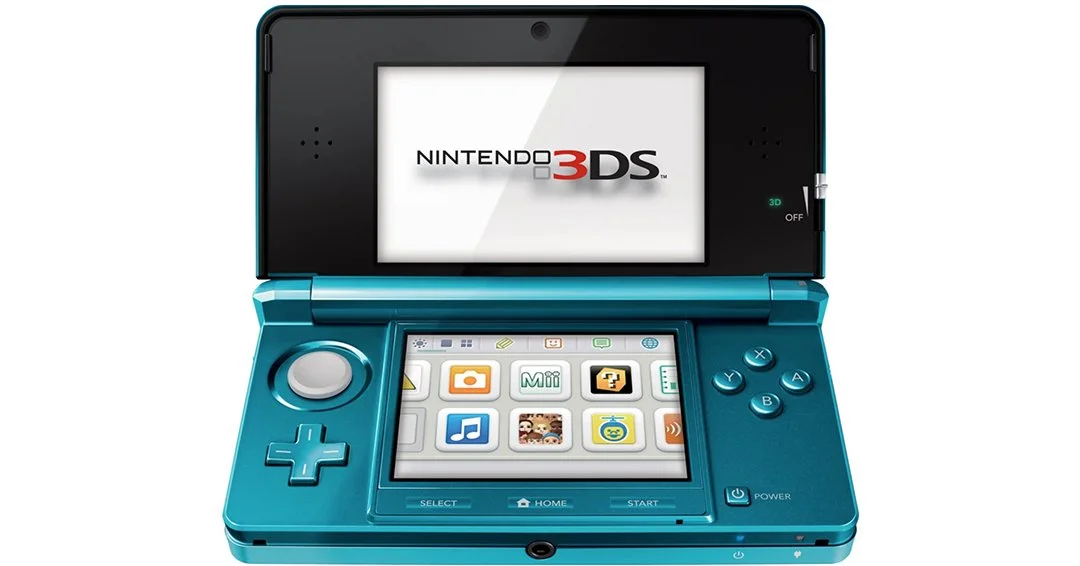
The DS family evolved into the Nintendo 3DS (2011) and further pushed Nintendo’s handheld experiments into another dimension. Nintendo pitched it as a portable system that could display 3D games without special glasses, while also offering features like augmented reality, 3D photos, and StreetPass. The 3DS was another hit for Nintendo, selling 75.94 million units worldwide.
Nintendo Switch (2017)
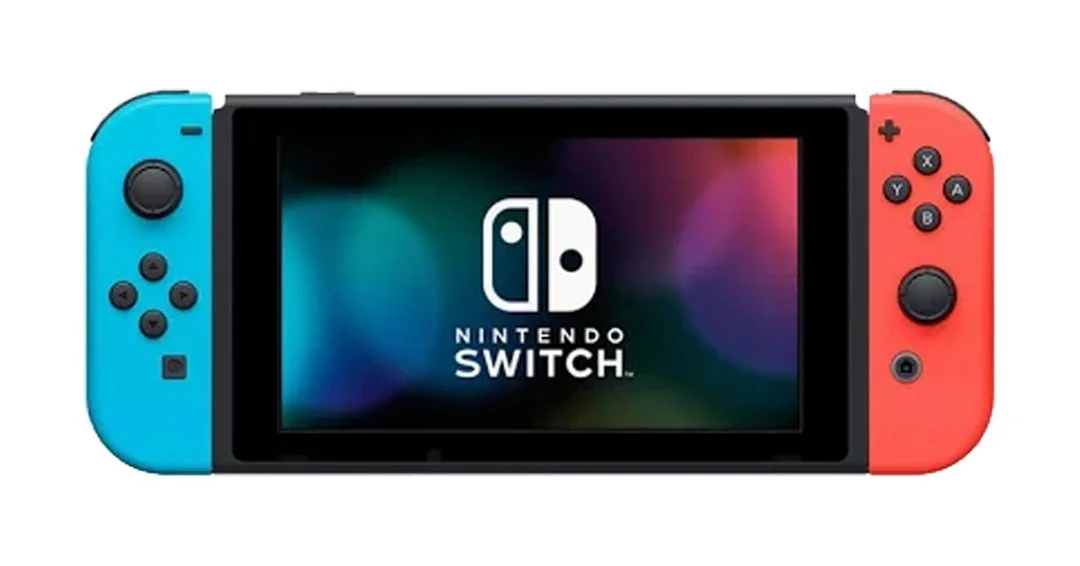
Nintendo kept experimenting (if you are sensing a theme, it is definitely that Nintendo never stops innovating). The bold move came in 2017 with the release of the Nintendo Switch. The Switch unified its home console and handheld lines, offering home console and handheld console gaming in one system. By December 31, 2025, the Switch had sold 155.37 million units worldwide,
Nintendo Switch 2 ( 2025)
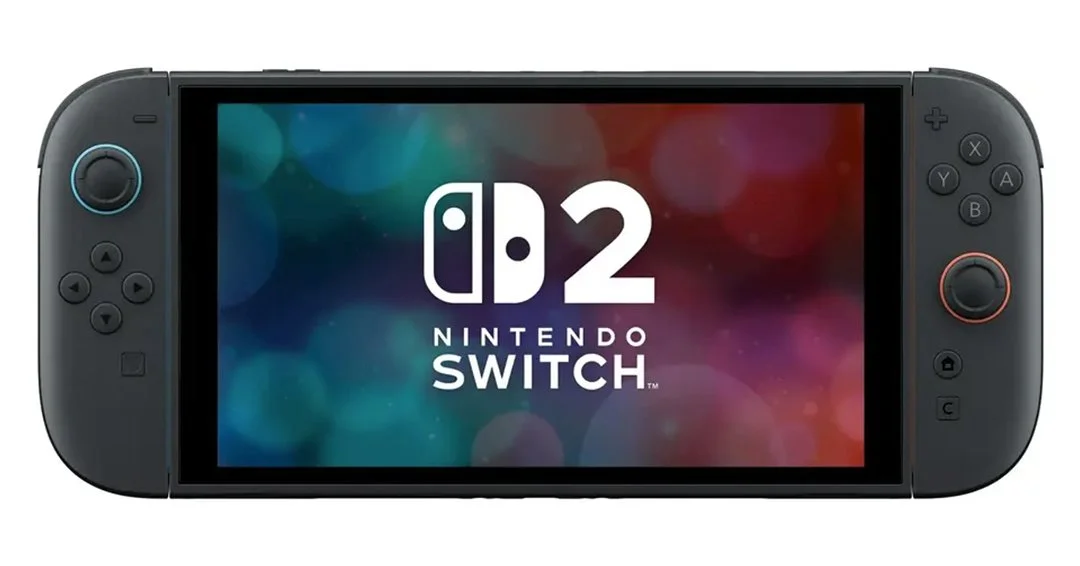
Ok, maybe Nintendo doesn’t always strive for huge leaps in innovation between new handhelds, but that isn’t always a bad thing. With the Switch 2, Nintendo doubled down on hybrid concept, with a larger 7.9-inch screen, support for HDR and up to 120 fps, 4K output through the dock, magnetic Joy-Con 2 controllers that can even function like a mouse, and built-in GameChat features. By December 31, 2025, it had already sold 17.37 million units worldwide, which is a strong sign that Nintendo’s hybrid era is nowhere close to over.
Nintendo Handheld Trademarks
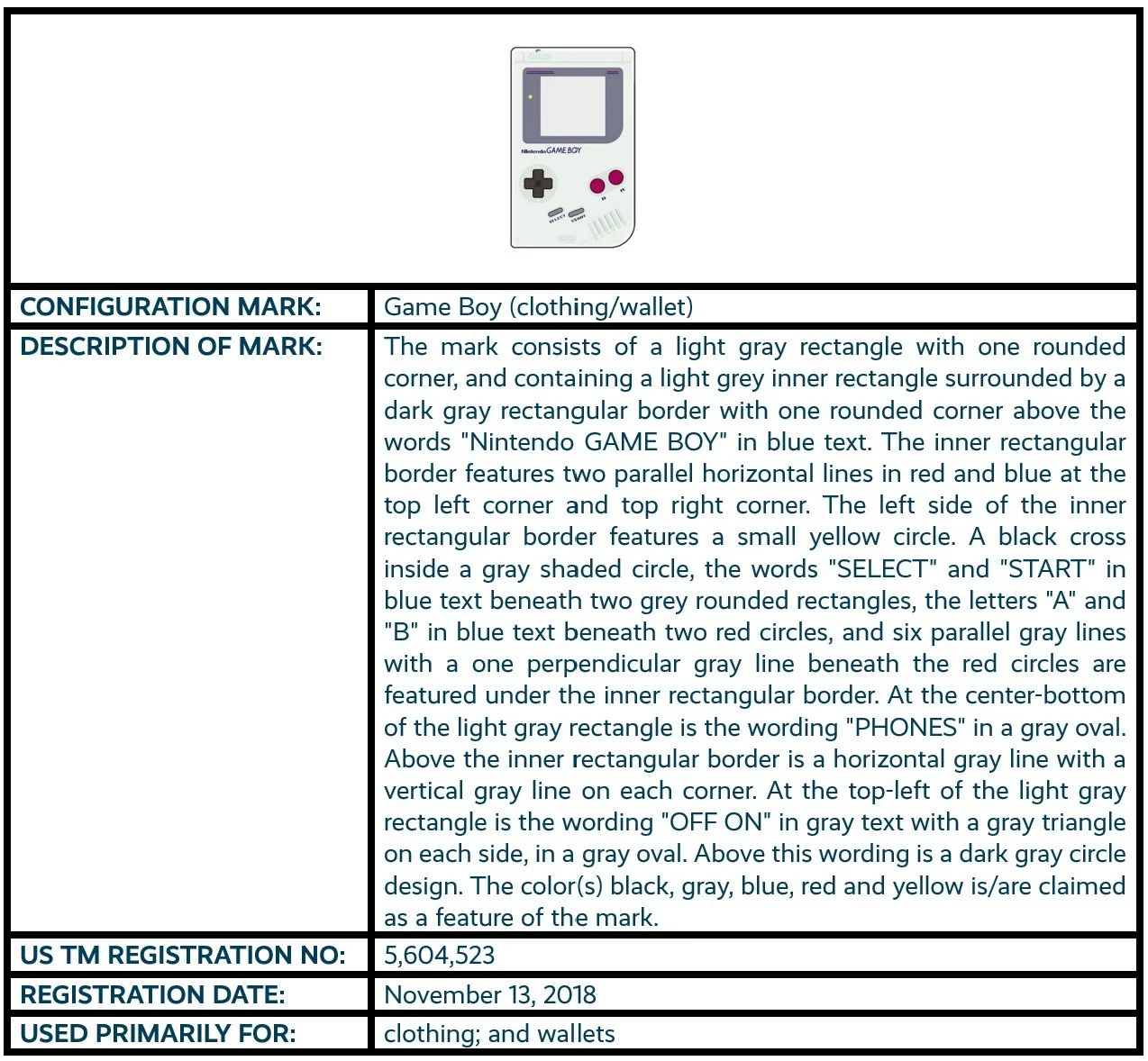
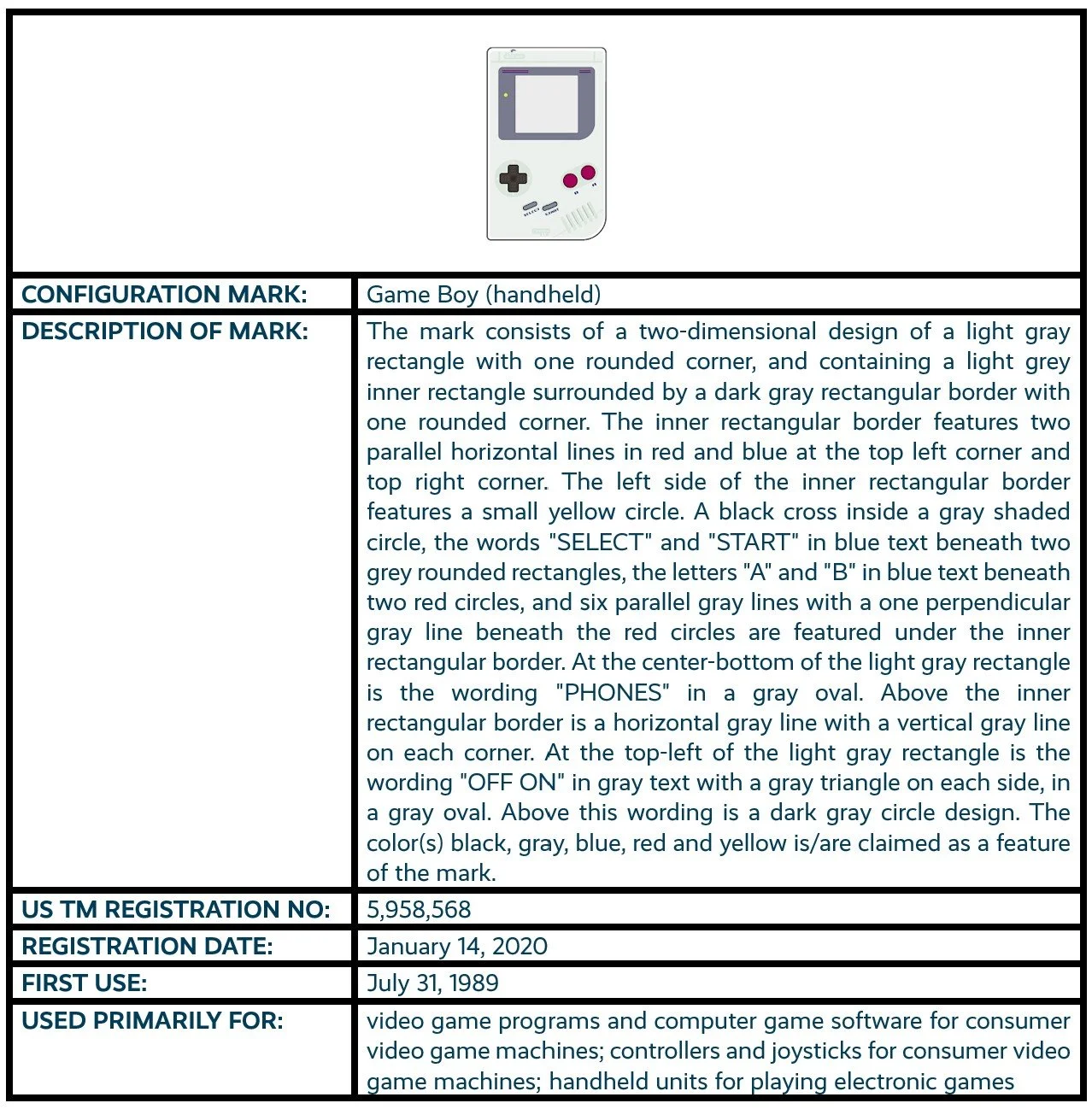
Nintendo owns two non-traditional trademark registrations for its handheld consoles, both directed to the original Game Boy. A first Game Boy configuration mark [3] is registered in connection with clothing and wallets. A second Game Boy configuration mark [4] is registered in connection with handheld units for playing electronic games.
Copyright © 2026 by Illustrated IP, LLC. All rights reserved.
[1] Nintendo of America, https://www.nintendo.com/us/.
[2] Every Nintendo Console: A Full History of Release Dates, IGN, last updated June 5, 2025, and available at https://www.ign.com/articles/all-nintendo-console-release-dates-in-order; Nintendo game consoles timeline, OFFICE TIMELINE, posted March 24, 2017, and available at https://www.officetimeline.com/blog/nintendo-game-consoles-timeline; List of Nintendo systems, NINTENDO WIKI, available at https://nintendo.fandom.com/wiki/List_of_Nintendo_systems; History of Nintendo Consoles From the Arcade to the Switch OLED, RECORD HEAD, available at https://recordhead.biz/history-of-nintendo-consoles/.
[3] USPTO, U.S. Trademark Registration No. 5,604,523, available at https://tsdr.uspto.gov/#caseNumber=87632363&caseSearchType=US_APPLICATION&caseType=DEFAULT&searchType=statusSearch.
[4] USPTO, U.S. Trademark Registration No. 5,958,568, available at https://tsdr.uspto.gov/#caseNumber=87833684&caseSearchType=US_APPLICATION&caseType=DEFAULT&searchType=statusSearch.