
Porsche 911 Configuration

Trademark: Porsche 911 Configuration
First Used: 1965
First Registered: 2002
Current Owner: DR. ING. H.C. F. PORSCHE AG [1]
Trademark Type: non-traditional trademark; trade dress; configuration mark
Primarily Associated With: automobiles [2] [3]
Brief (and likely incomplete) History [4]:
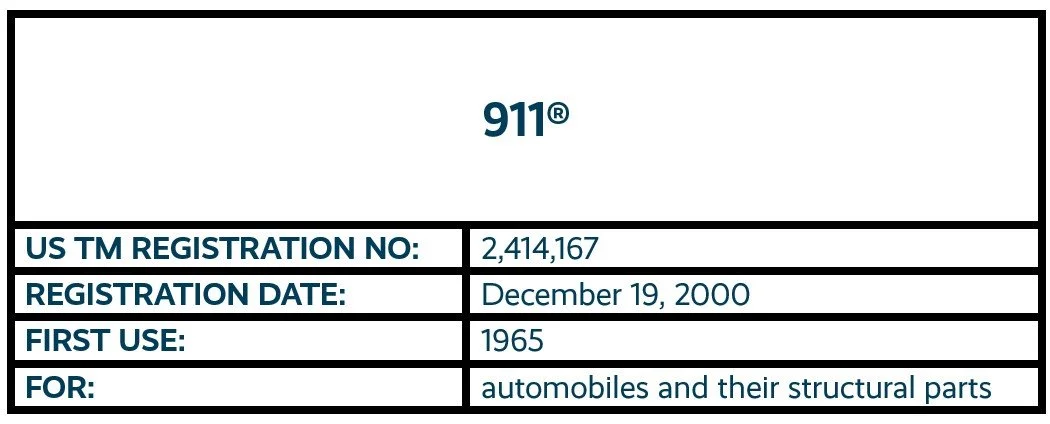
We won’t bury the lede: the iconic PORSCHE® 911® [5] sports car got its name from a trademark dispute. Porsche debuted model 901 as the successor to the 356 sports car at the 1963 Frankfurt Motor Show. A year later, the company began production and displayed the Porsche 901 at the Paris Motor Show. Peugeot, the much larger French car manufacturer at the time, objected to the 901 branding, claiming it owned trademark rights to any/all three-digit car model designations having a zero in the middle (such as the Peugeot 201 and 302 models). As the smaller company wanting to avoid a fight, Porsche agreed to rebrand to 911.
Since the 901 was rebranded to 911 in 1964, there have been a total of eight generations of 911 sports cars:
Original 911 First Generation (1963–1973)
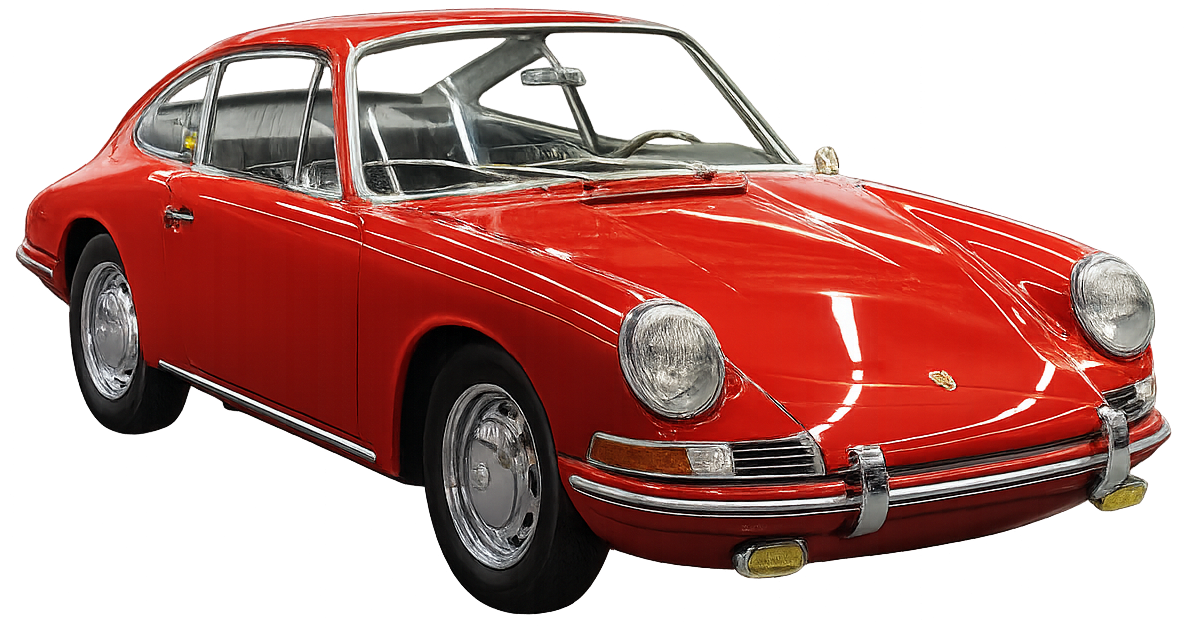
The first 911 introduced Porsche’s now-classic formula: a rear-mounted, air-cooled flat-six engine wrapped in a sleek fastback shape with two small rear seats. Early models ranged from 110–160 PS before displacement increased to 2.2 L, 2.4 L, and ultimately 2.7 L for the legendary Carrera RS 2.7. This era also brought major innovations including the Targa body style, mechanical fuel injection, and Porsche’s first production rear spoiler.
G-Series Second Generation (1973–1989)
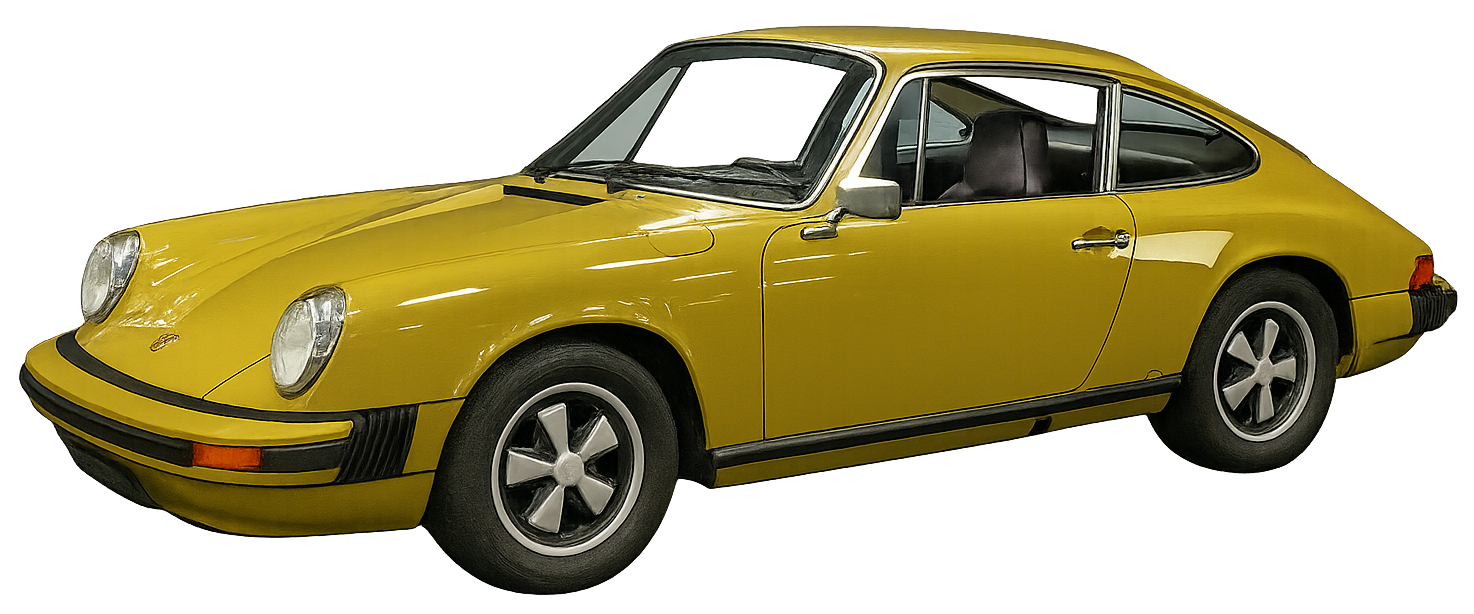
The G-Series kept the 911’s profile but added impact bumpers, improved safety systems, and a wider body option. Flat-six engines grew to 3.2 L, and in 1975 Porsche launched the first turbocharged 911, the 930, with 260–300 PS and iconic “whale tail” styling. Hot-dip galvanizing (from 1975) dramatically improved corrosion resistance, while digital engine management arrived in the mid-1980s.
964 Third Generation (1989–1994)
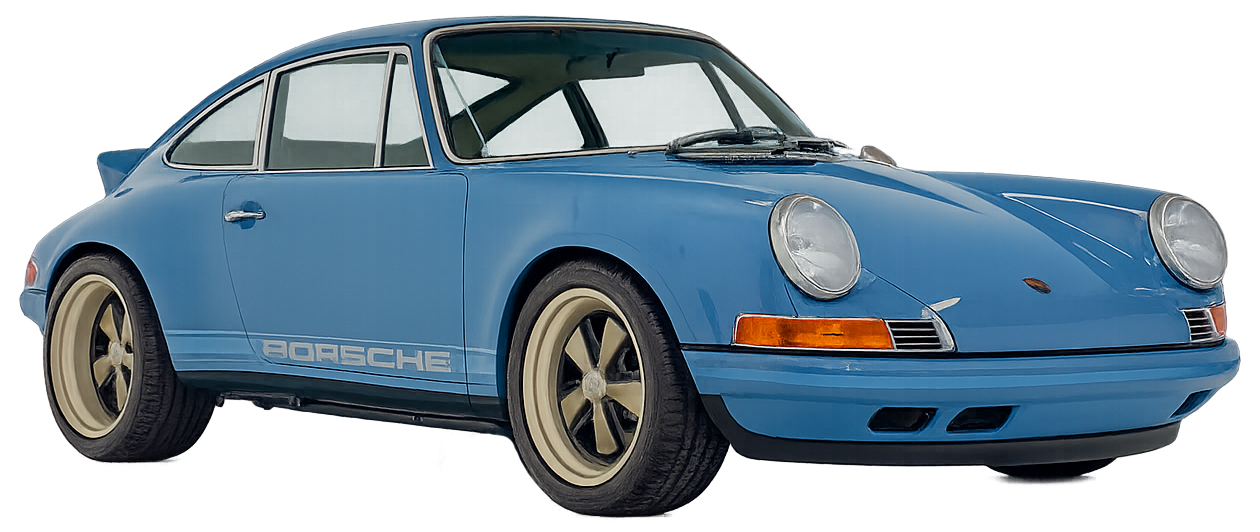
Although the silhouette remained familiar, the 964 was 85 percent new, adding power steering, ABS, modern climate control, and the first 911 all-wheel-drive system (Carrera 4). A new 3.6 L flat-six made 250 PS, while Turbo models reached 320–360 PS. The 964 also introduced Tiptronic, dual airbags, and the first automatically deploying rear spoiler.
993 Fourth Generation (1994–1998)
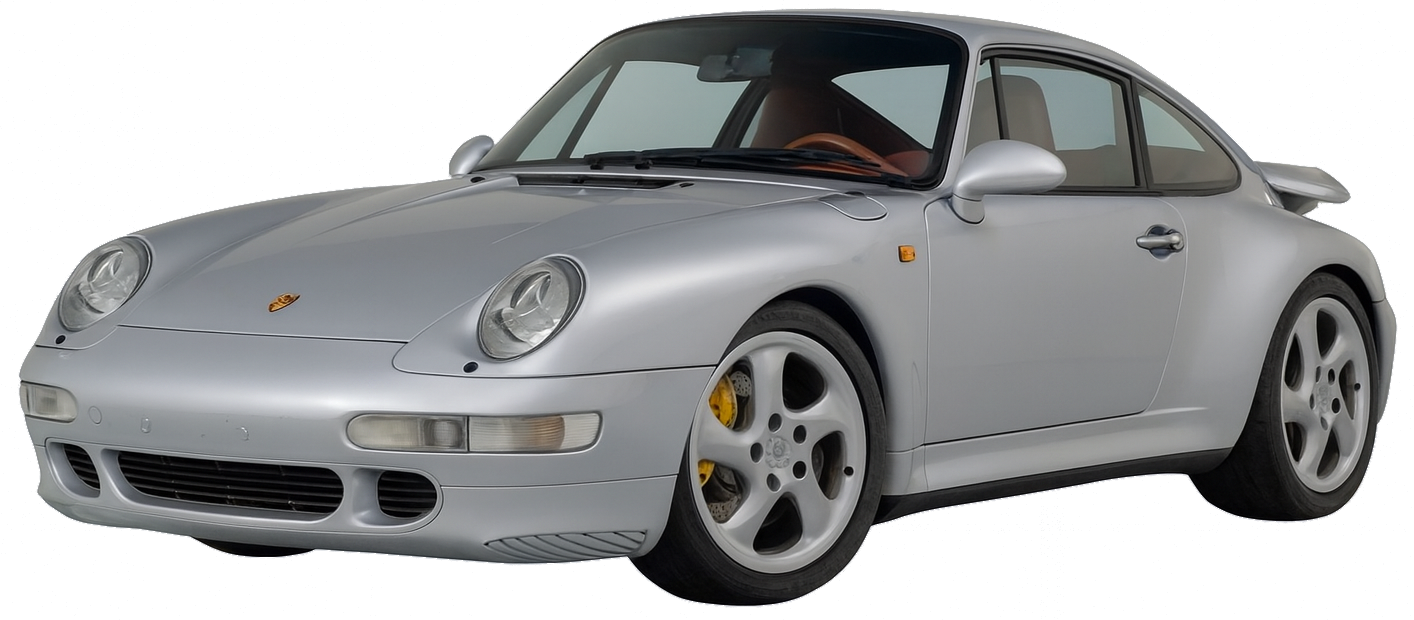
The 993 featured significantly updated styling, a multi-link rear suspension, and major improvements in stability and comfort. Engines ranged from 272 PS to 450 PS in the Turbo, which debuted twin turbochargers and all-wheel drive for the first time. With its refined handling and timeless proportions, the 993 is widely regarded as the pinnacle of the air-cooled era (and the last air-cooled 911).
996 Fifth Generation (1998–2005)
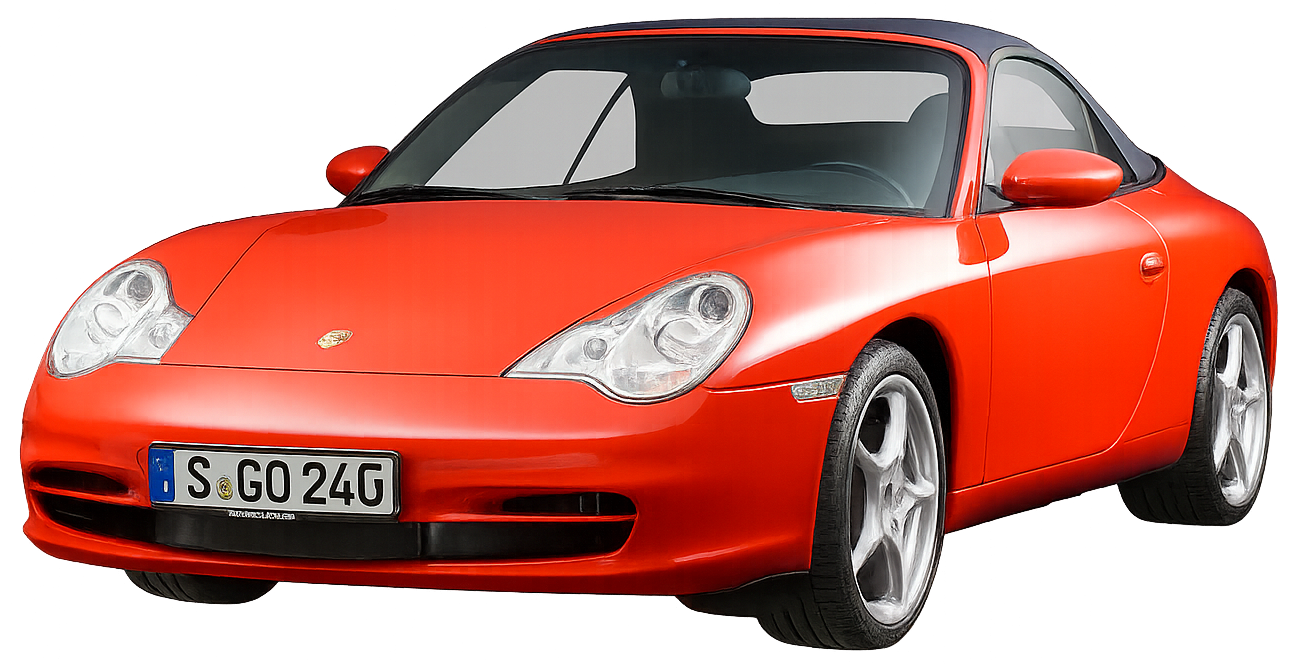
The 996 marked the biggest mechanical shift in 911 history with its new water-cooled flat-six and more aerodynamic bodywork featuring integrated headlamps. Entry models made 300+ PS, while Turbo and GT2 variants exceeded 415 PS and introduced Porsche Ceramic Composite Brakes. Lighter, faster, and more compliant, the 996 reset the platform for modern emissions and performance standards.
As a cost cutting move to make the first generation Porsche Boxster (with its own iconic Porsche Boxster Configuration) more affordable, the Boxster 986 actually shared many components with the 996!
997 Sixth Generation (2004–2012)
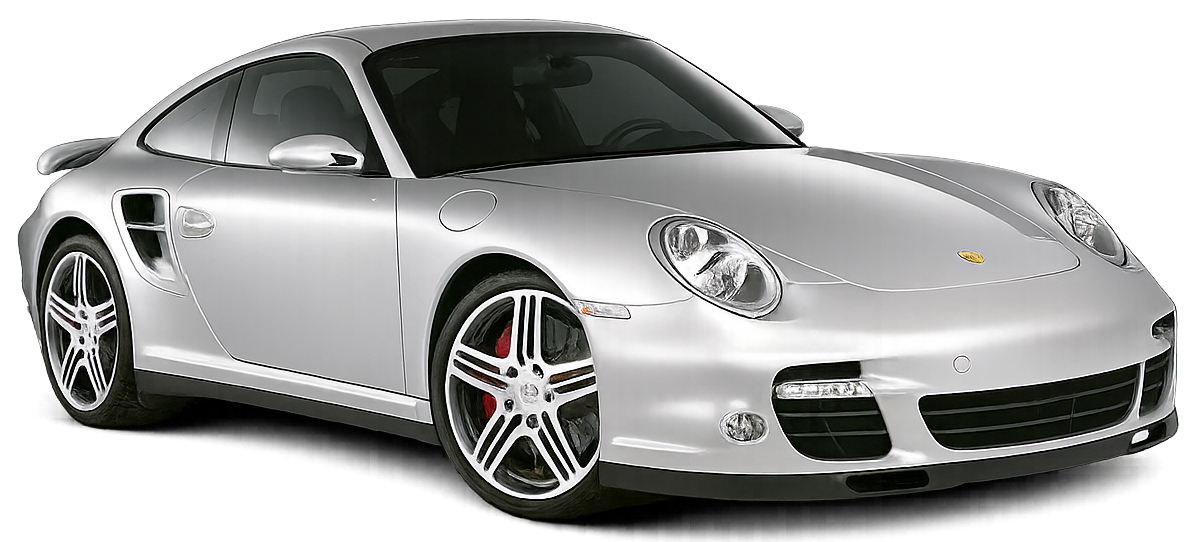
Styling returned to round headlights, but beneath the surface Porsche introduced PASM adaptive suspension, variable-geometry turbochargers, and the option of the lightning-quick PDK dual-clutch gearbox. Power ranged from 325 PS in the Carrera to 620 PS in the GT2 RS. The 997 blended nostalgia with cutting-edge engineering and spawned beloved special editions like the Sport Classic.
991 Seventh Generation (2011–2019)
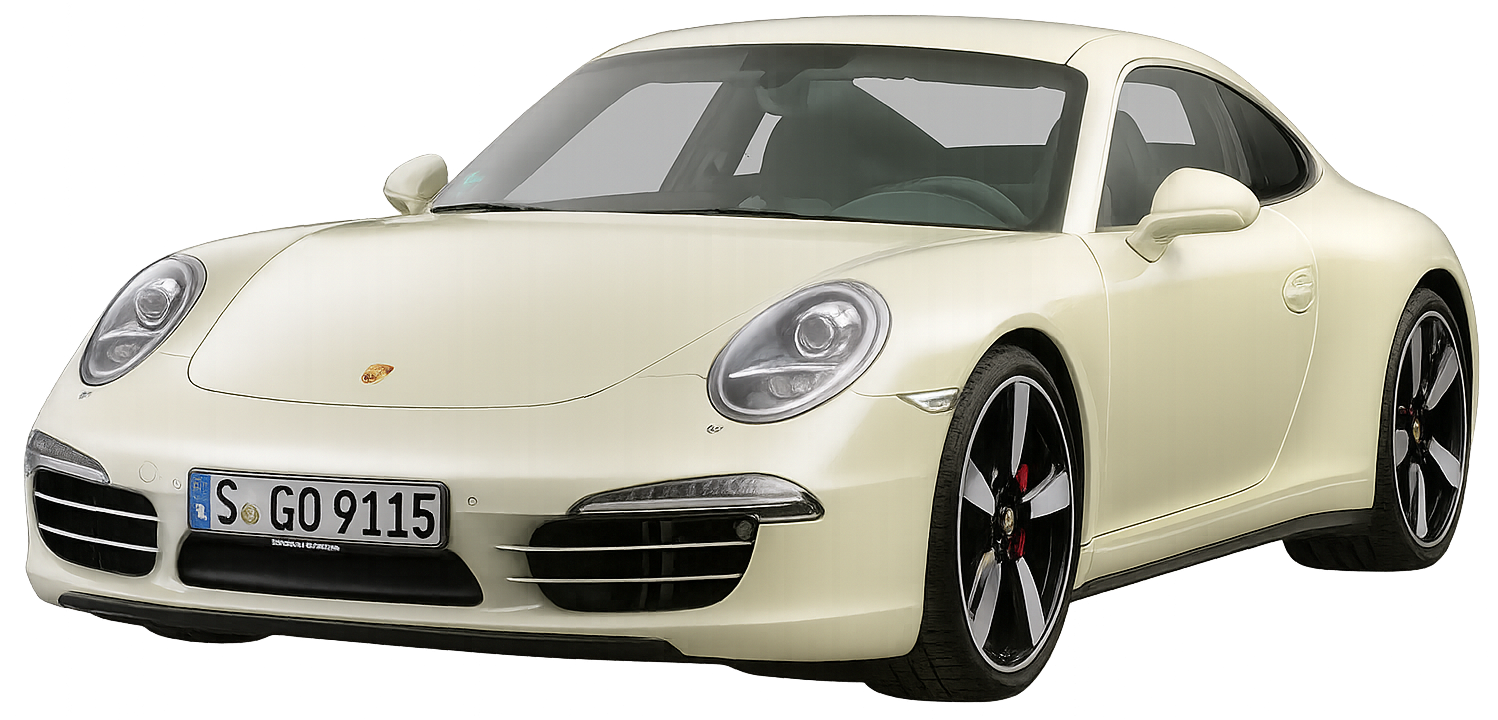
The 991 sat on a new aluminum-steel platform with a longer wheelbase and wider track yet shed about 80 kg over the 997. Naturally aspirated engines gave way to turbocharged units in the 2016 update, dramatically increasing torque and efficiency. Technologies such as rear-axle steering, PDCC active roll control, and advanced aerodynamics positioned the 991 as a major leap in sophistication.
992 Eighth Generation (2019–Present)
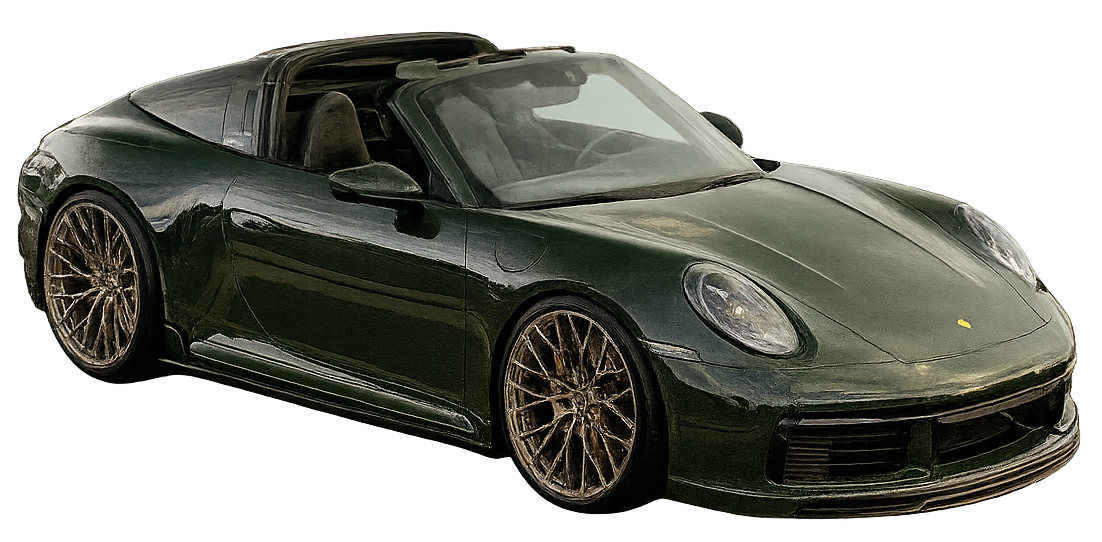
The 992 introduced a wider stance for all models, an upgraded digital interior, and an eight-speed PDK designed to accommodate future hybridization. Power ranges from 385 PS in the Carrera to over 640 PS in the Turbo S, with new tech like Wet Mode, Night Vision Assist, and active aerodynamics. Models like the off-road-ready Dakar and the hybrid Carrera GTS show how Porsche continues to evolve the 911 without losing its core identity.
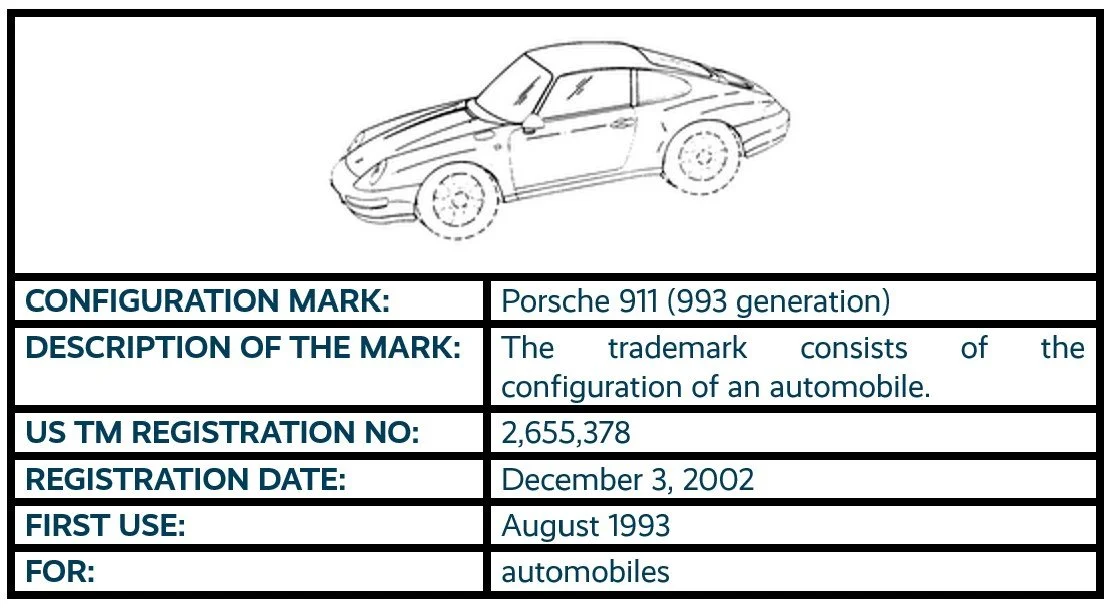
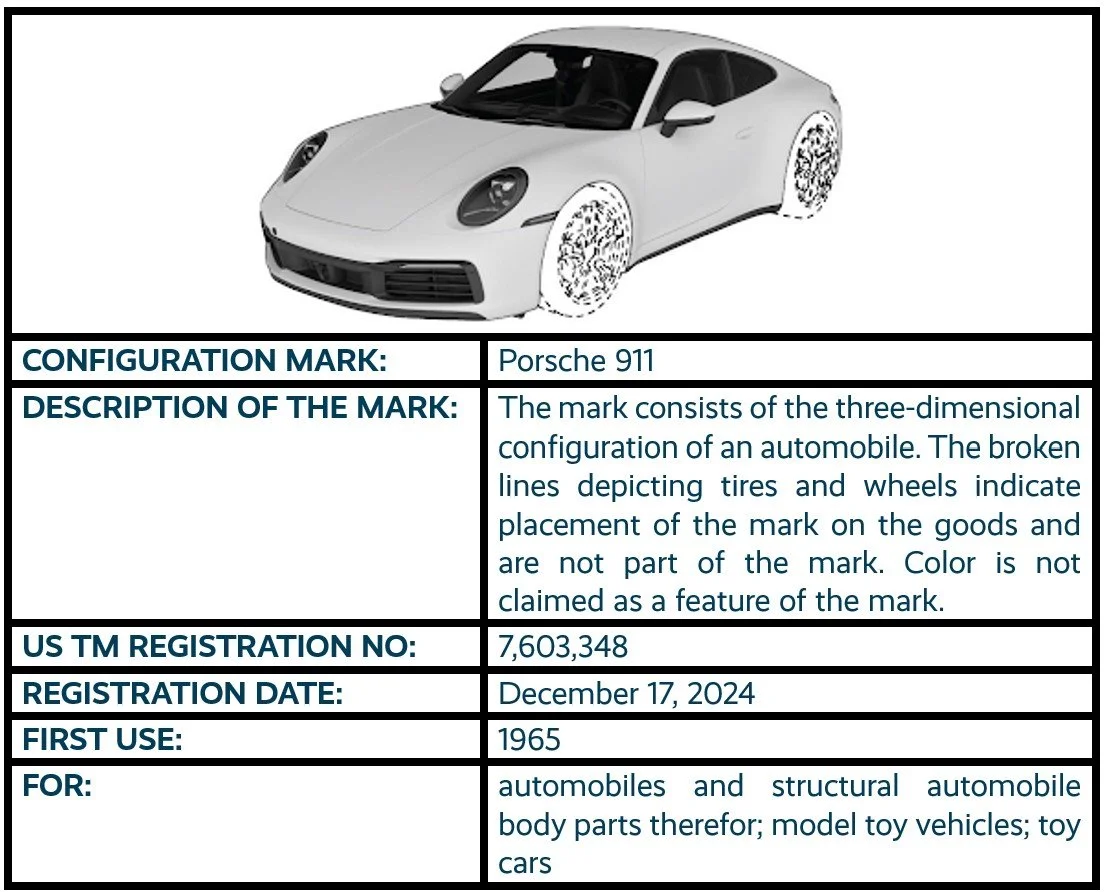
Today, Porsche owns two configuration mark trademark registrations protecting the design and overall-configuration of its 911 vehicles. The Porsche 911 (993 Generation) configuration mark [2] was the first of the two to be filed (2000) and registered (2004) and protects the configuration on the 993 generation of Porsche 911s. The Porsche 911 configuration mark [3] was the second of the two to be filed (2022) and registered (2024) and attempts to broadly protect the configuration of all generations of Porsche 911 sports cars through time.
Copyright © 2025 by Illustrated IP, LLC. All rights reserved.
[1] Porsche 911, https://www.porsche.com/usa/models/911/.
[2] USPTO, U.S. Trademark Registration No. 2,655,378, available at https://tsdr.uspto.gov/#caseNumber=75917910&caseSearchType=US_APPLICATION&caseType=DEFAULT&searchType=statusSearch.
[3] USPTO, U.S. Trademark Registration No. 7,603,348, available at 7,603,348, available at https://tsdr.uspto.gov/#caseNumber=97625985&caseSearchType=US_APPLICATION&caseType=DEFAULT&searchType=statusSearch.
[4] Porsche 901, PORSCHE, available at https://www.porsche.com/central-eastern-europe/en/_georgia_/accessoriesandservice/classic/models/911-f/911-f-901/; The Real Reason Why Porsche Changed the 901's Name to 911, ROAD & TRACK, published December 28, 2017, and available at https://www.roadandtrack.com/car-culture/classic-cars/a14510314/why-porsche-changed-901-to-911/; Here's every single generation of Porsche 911, TOP GEAR, available at https://www.topgear.com/car-news/heres-every-single-generation-porsche-911; 60 years of the Porsche 911, PORSCHE NEWSROOM, available at https://newsroom.porsche.com/en/press-kits/911-s-t/60-years-of-the-Porsche-911.html; Porsche 911’s Evolution, PEDAL COMMANDER, last updated March 10, 2025, and available at https://pedalcommander.com/blogs/garage/comparing-porsche-911-generations.
[5] USPTO, U.S. Trademark Registration No. 2,414,167, available at https://tsdr.uspto.gov/#caseNumber=75917912&caseSearchType=US_APPLICATION&caseType=DEFAULT&searchType=statusSearch.