
LEGO Minifigures
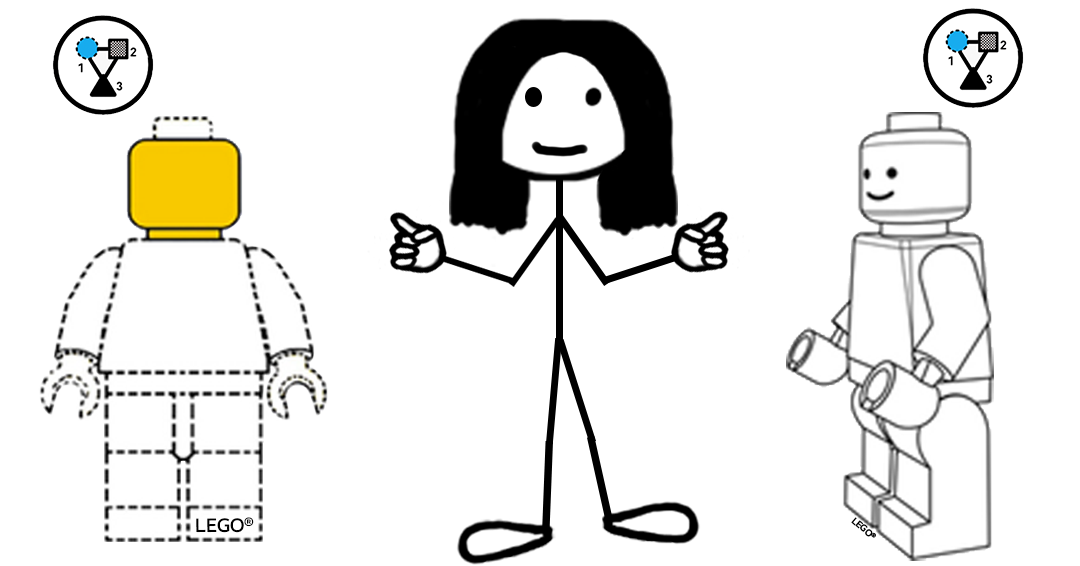
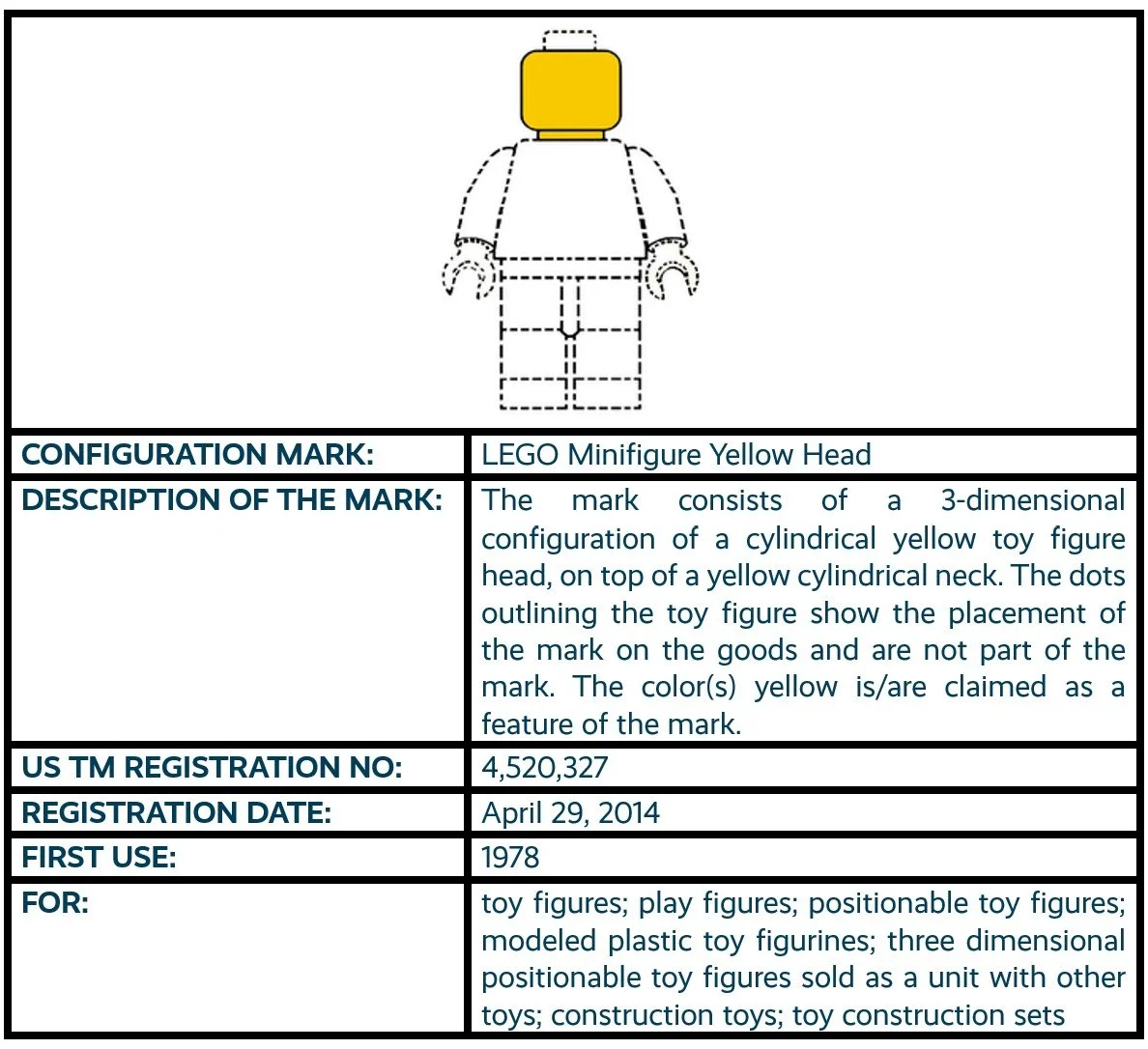
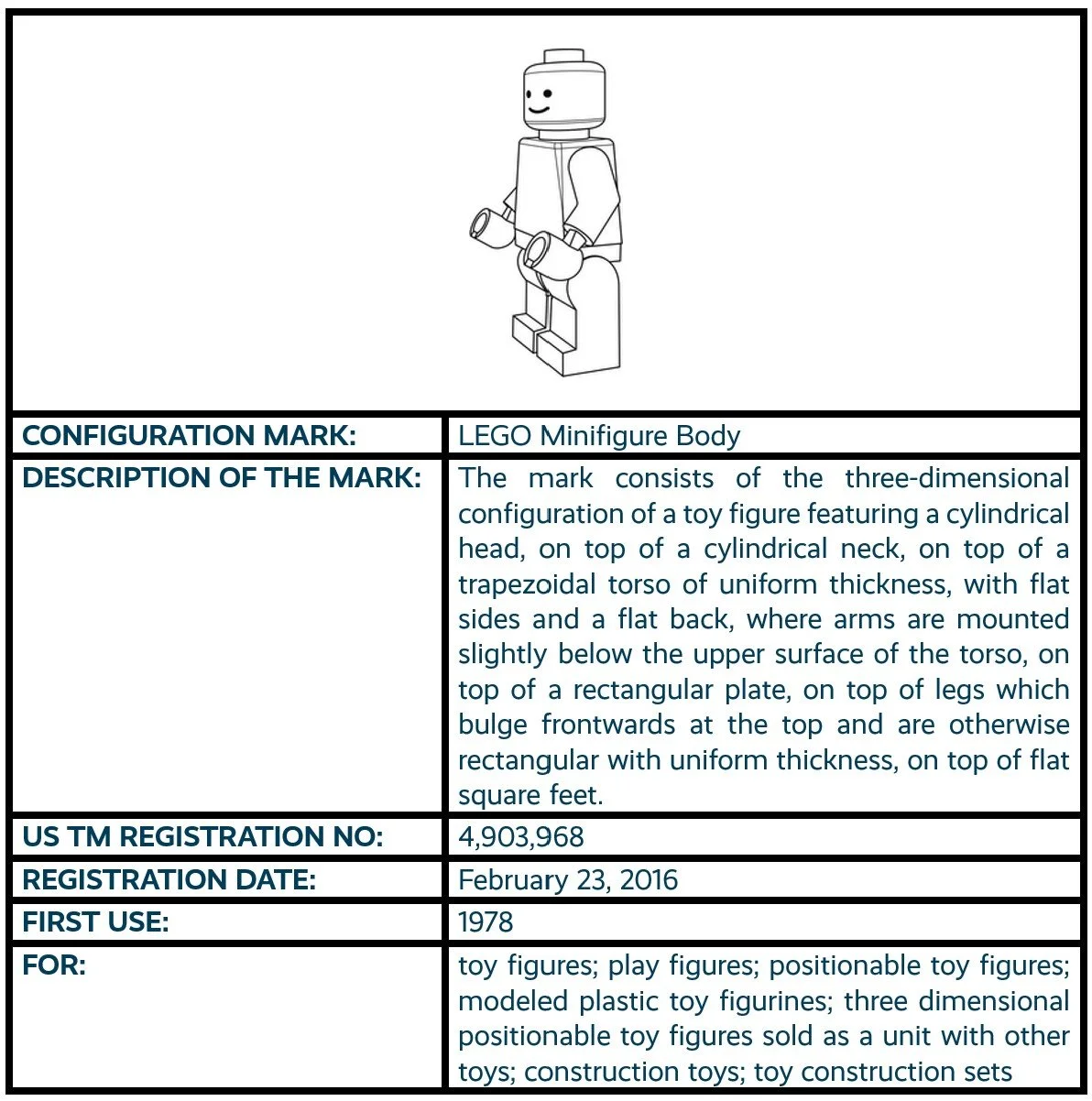
Trademark: LEGO Minifigure
First Used: 1978
Registered: 2014
Current Owner: LEGO HOLDING A/S [1]
Trademark Type: non-traditional trademark; trade dress; configuration mark
Primarily Associated With: toy figures [2] [3]
Brief (and likely incomplete) History [4]:
LEGO has an awesome trademark portfolio, ranging from traditional trademark registrations that protect the LEGO® brand name and logos, to non-traditional trademark registrations that protect features of LEGO bricks and LEGO minifigures. Today, let’s take a look at registrations for LEGO minifigures!
The early history of LEGO sets consisted mostly of buildings and vehicles, which allowed for lots of creation and playtime, but something was missing: inhabitants of the created worlds that would allow children (and adults) to really lose themselves in the roleplaying magic.
LEGO Police Officers (1958)

Before minifigures, LEGO’s Town Plan era experimented with HO-scale figures to bring city scenes to life. A classic example is the Traffic Police set (271-2) from 1958, which included four police officer figurines posed to direct traffic, plus a traffic light and road pieces. However, the LEGO Police Officers were all in fixed positions and did not “stick” to LEGO bricks.
LEGO Building Figures (1974)
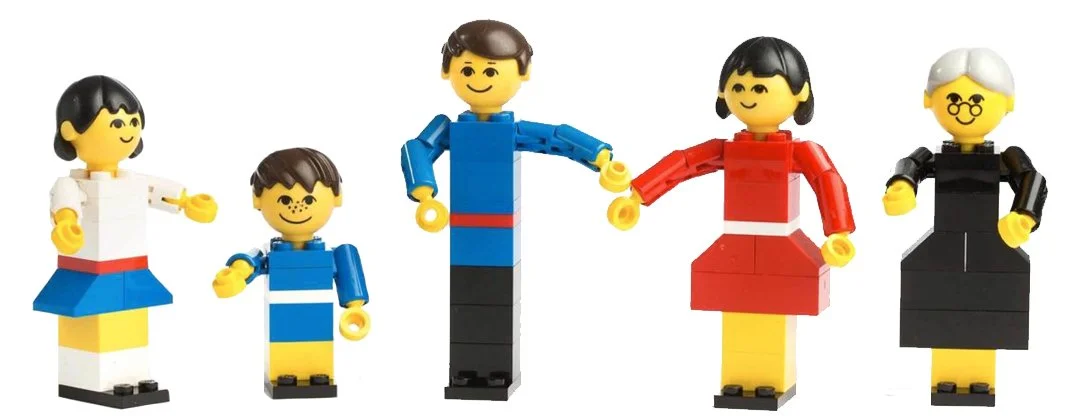
In 1974, LEGO introduced the LEGO Building Figure (also known as a “maxifigure”), a larger, brick-built character with a round yellow head, decorated facial features, and movable arms, while the torso and legs were built from bricks. This was a meaningful step because it proved LEGO sets could support role play, not just structures, even if the scale was still a little too big for many towns and trains.
Why the yellow coloring and faces? LEGO has said yellow was meant to keep its figurines “happy and neutral,” without assigning a specific race, so kids could decide who the character was through play.
LEGO Stage Extras (1975)

In 1975, LEGO released a smaller figure on the right scale but with big limitations. The LEGO Stage Extras (or just “The Extras”) were four bricks tall, with a faceless round yellow head and a torso showing the contours of arms and legs. But the major limitation was that it couldn’t “stick” to a brick and couldn’t “walk” or “move.” It was a clear prototype stage, but the scale decision was the key win between the Building Figures and eventual Minifigures.
LEGO Minifigure (1978)

The classic LEGO Minifigure design we all know and love was released in 1978, and the basic design has remarkably changed little over the ensuing half-century. After LEGO Stage Extra in 1975, designer Jens Nygård Knudsen kept iterating to create a figure with more life, including movable arms and legs and one that could “stick” to bricks. LEGO management approved it for production, and it launched in 1978 as the LEGO Minifigure, quickly becoming the default “person” across themes.
LEGO Pirate Minifigures (1989)
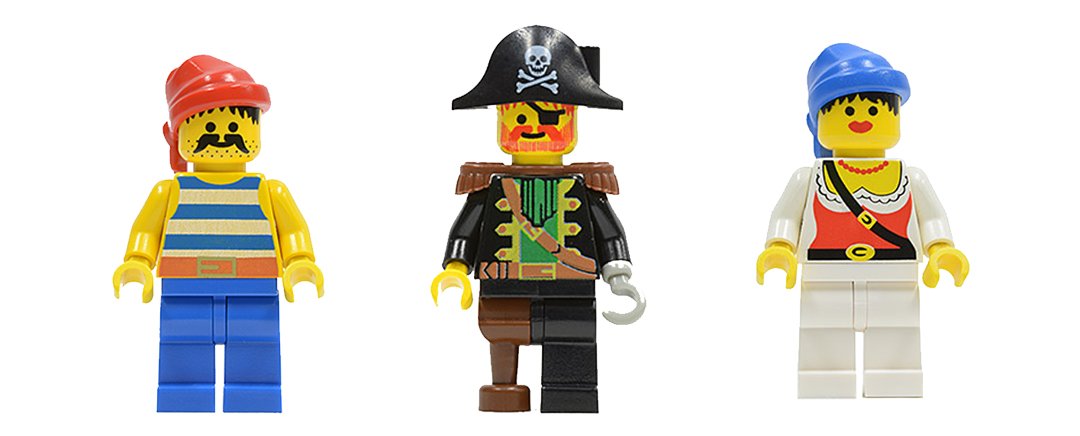
In 1989, LEGO advanced its minifigure design to include characters with different facial expressions and body parts. The LEGO Pirate Minifigures required changes to the standard facial decoration to make more credible characters: pirates needed eye patches, peg legs, hooks and other sailing essentials. This was a big turning point for variety, personality, and storytelling in LEGO Minifigures.
LEGO Licensed Sets and Minifigures (1999)
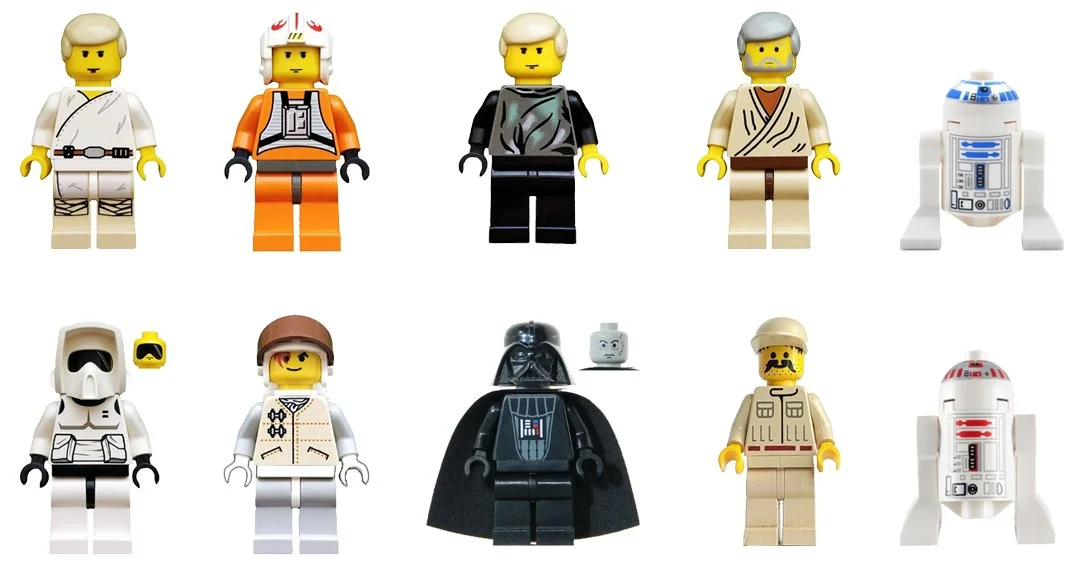
In 1999, LEGO Star Wars debuted and marked LEGO’s entry into licensed, character-driven minifigures. Instead of “generic space pilot” minifigures, builders suddenly had Luke Skywalker, Darth Vader, R2-D2, and stormtroopers that were clearly meant to be specific characters. The line was unveiled at Toy Fair in New York in February 1999 and launched later that year alongside Star Wars: Episode I - The Phantom Menace.
Since then, LEGO’s licensed sets and minifigures has absolutely exploded. LEGO Harry Potter followed in 2001, bringing Hogwarts and its cast into brick form. LEGO Spider-Man arrived in 2002, helping establish LEGO’s long-running relationship with Marvel characters. LEGO Batman launched as its own theme in 2006, before expanding into the broader LEGO DC universe in later years. Then in 2008, LEGO Indiana Jones hit shelves, proving that nostalgia-driven film franchises and minifigures were a powerful combination. From that point forward, licensed themes were not just an experiment. They were a core pillar of the LEGO minifigure universe.
Copyright © 2026 by Illustrated IP, LLC. All rights reserved.
[1] Lego, https://www.lego.com/en-us.
[2] USPTO, U.S. Trademark Registration No. 4,520,327, available at https://tsdr.uspto.gov/#caseNumber=85896559&caseSearchType=US_APPLICATION&caseType=DEFAULT&searchType=statusSearch.
[3] USPTO, U.S. Trademark Registration No. 4,903,968, available at https://tsdr.uspto.gov/#caseNumber=86537461&caseSearchType=US_APPLICATION&caseType=DEFAULT&searchType=statusSearch.
[4] The LEGO Group History, LEGO, available at https://www.lego.com/en-us/aboutus/lego-group/the-lego-group-history; LEGO History, LEGO, available at https://www.lego.com/en-us/history; Brick by Brick: A History of LEGO, LIBRARY POINT, posted May 13, 2024, and available at https://www.librarypoint.org/blogs/post/history-of-lego/; A Brief History of LEGO Minifigures, BRICK RESALES, posted February 24, 2022, and available at https://brickresales.com.au/blogs/blog/a-brief-history-of-lego-minifigures; LEGO History Role Play, LEGO, available at https://www.lego.com/en-us/history/articles/f-role-play; The story of the LEGO minifigure – Part 1, THE BRICK BLOGGER, posted September 3, 2018, and available at https://thebrickblogger.com/2018/09/the-story-of-the-lego-minifigure-part-1/; The First LEGO® Minifigure: History of the Lego Minifigure, GAME OF BRICKS, posted February 6, 2020, and available at https://gameofbricks.eu/blogs/news/the-first-lego-minifigure-history-of-the-lego-minifigure; Why Are LEGO Minifigures Yellow?, BRICKS AND MINIFIGURES, posted March 16, 2025, and available at https://www.bricksandminifigsmetroeast.com/blogs/news/why-are-lego-minifigures-yellow.
[5] Id. at 2.
[6] Id. at 3.