
Hot Dog Packaging Trademarks

Trademark: Hot Dog Packaging
Trademark Type: non-traditional trademark; trade dress; configuration mark
Primarily Associated With: sausage [1][2] and frankfurters [3][4][5][6]
Brief (and likely incomplete) History [7]:
We have learned a lot about hot dogs lately, including when the phrase “HOT DOG” can (and can’t) function as a trademark, and the famous WIENERMOBILE® vehicle. To wrap up our hot dog studies this year, let’s take a look at some hot dog packaging protected by non-traditional trademark registrations.
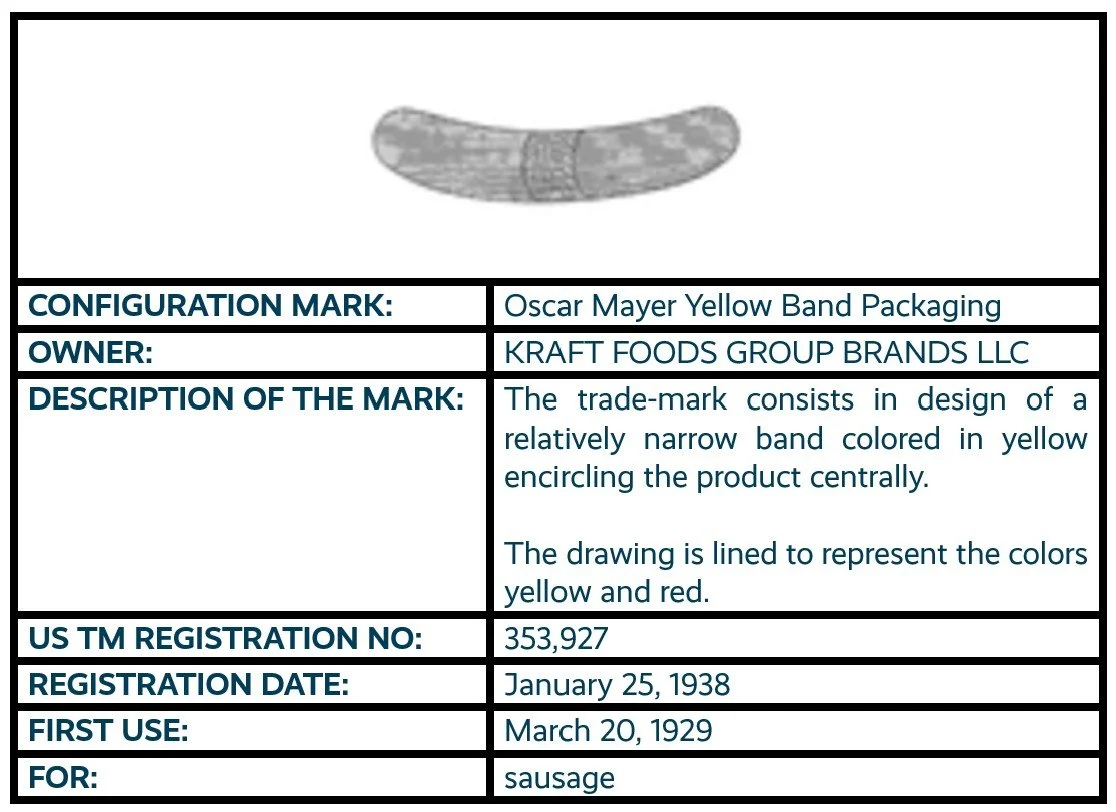
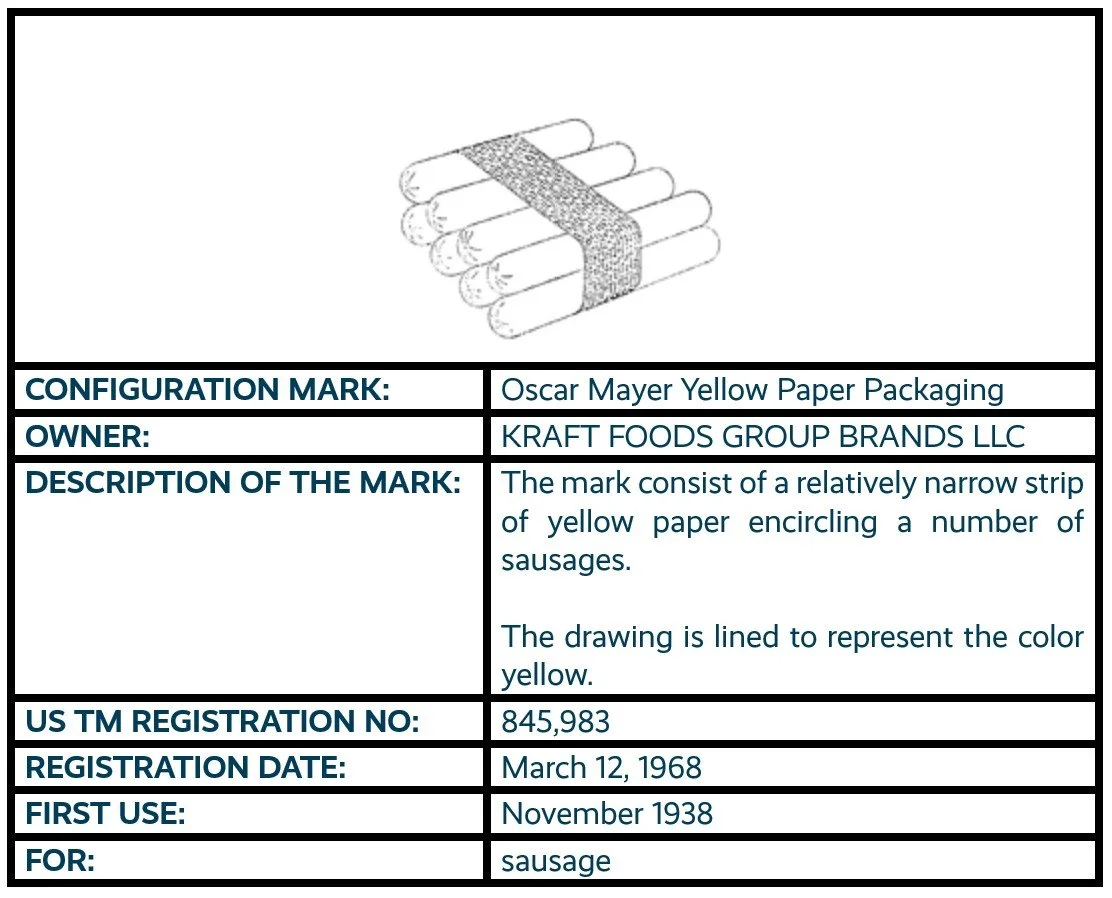
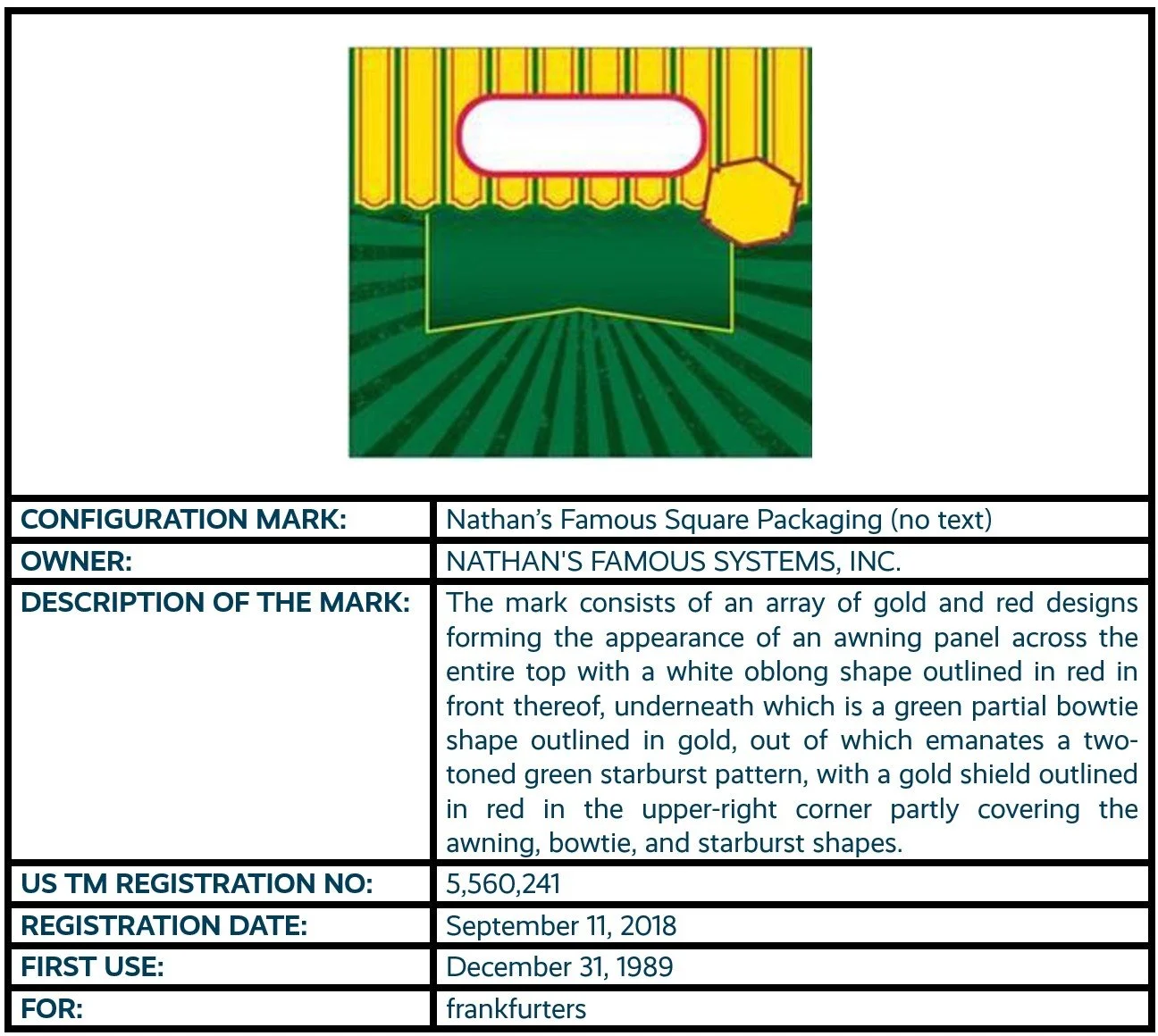
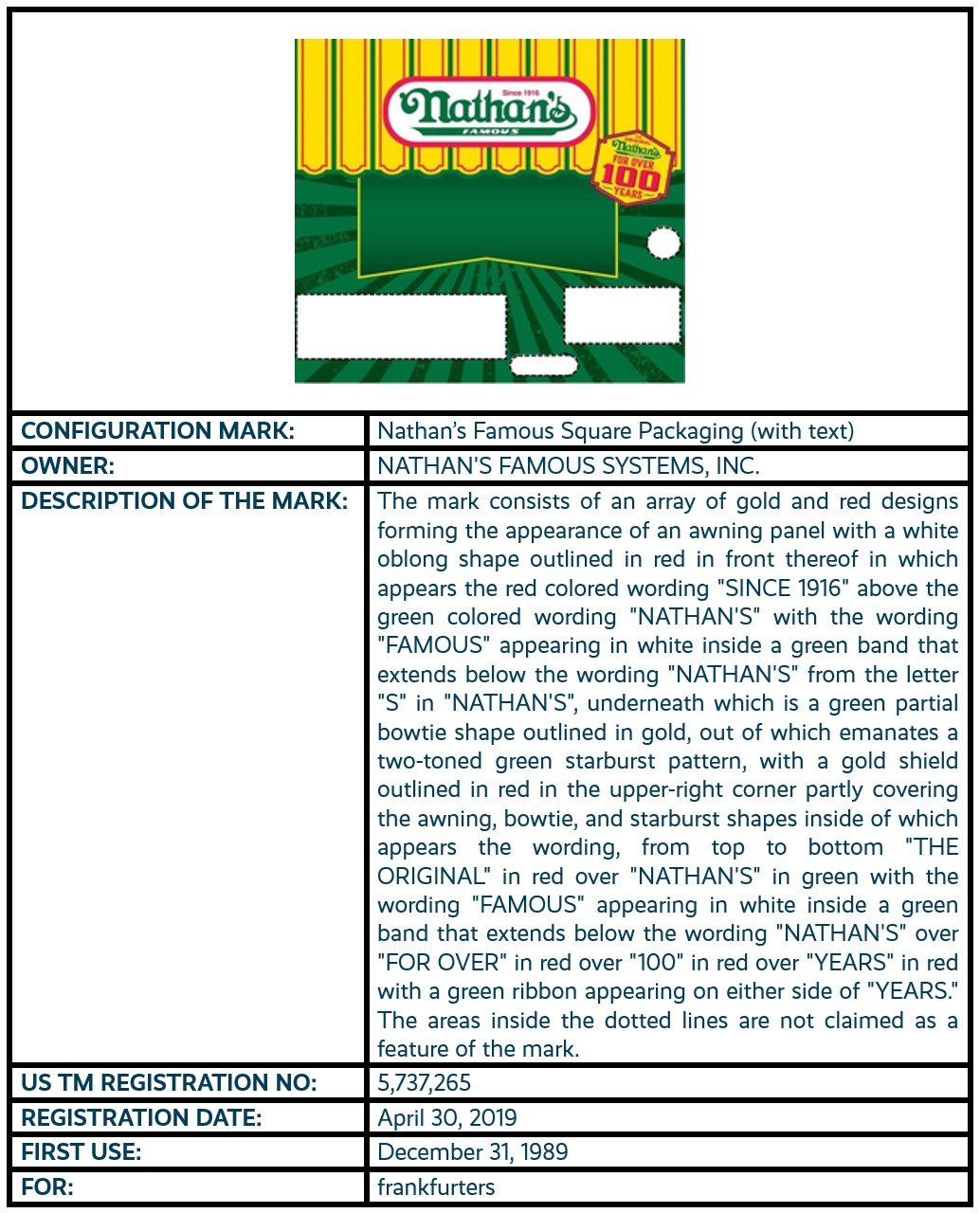
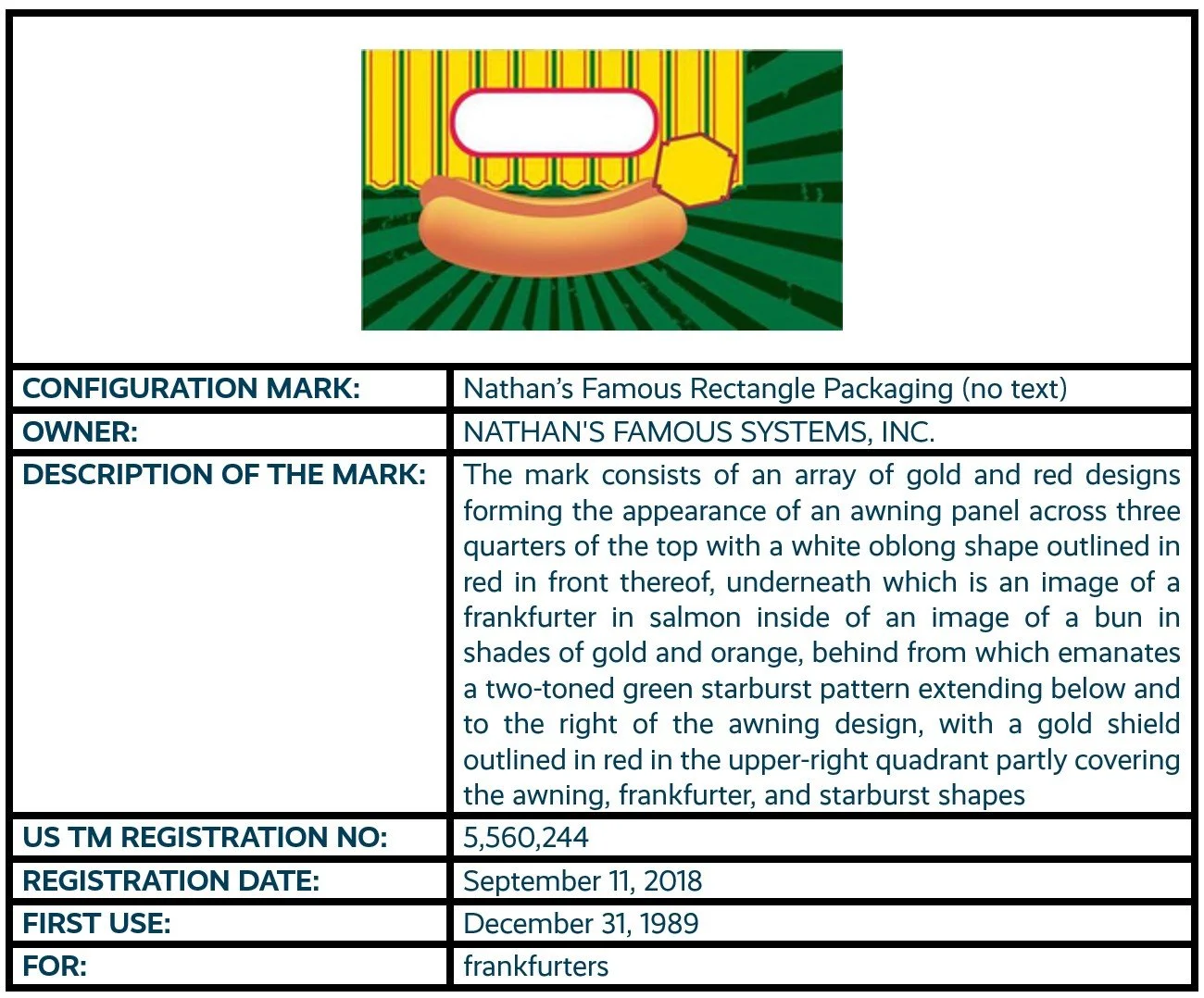
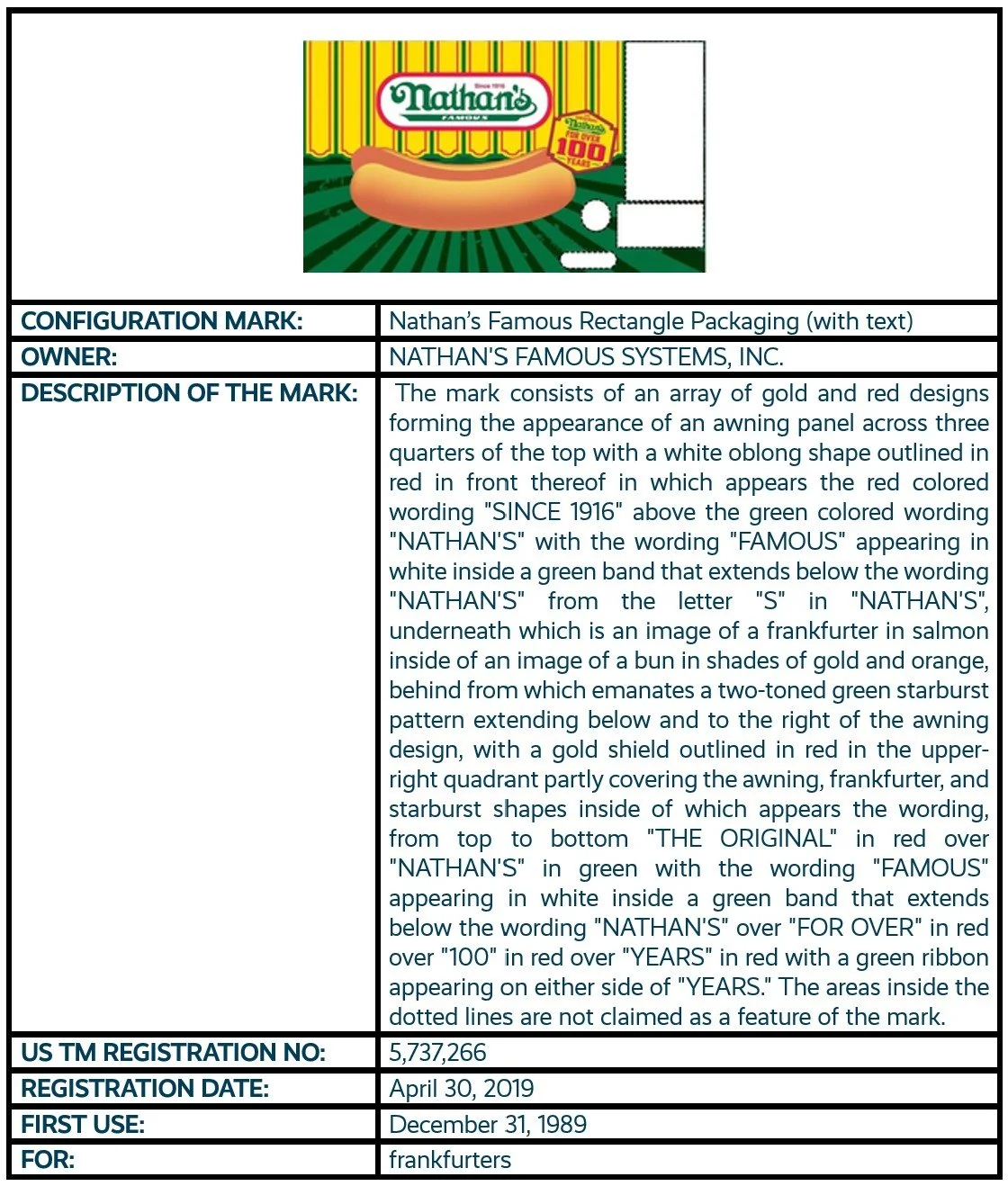
Product packaging can do more than just hold a product (or in this case, a hot dog). If the configuration of a package (shape, color combinations, positioning, etc.) tells consumers who made the product, it may be able to function as a trademark. When you first looked at the two hot dog packages above, did you quickly know each brand owner without seeing any other words or logos? The answers are below, and let’s learn more about each well-known hot dog brand.
Oscar Mayer
Oscar Mayer was founded in 1883, initially selling a variety of meats before hot dogs quickly became one of its signature products. Demand for ready-to-eat sausages was quickly growing in the early 1900s, but at the time most hot dogs were sold in bulk with little or no branding, making it difficult for consumers to distinguish one company's sausage from another. In 1929, Oscar Mayer introduced a yellow paper band wrapped around its hot dog packages bearing the Oscar Mayer name. The yellow band helped identify the company's products at a glance and soon became a defining feature of Oscar Mayer hot dog packaging.
Oscar Mayer continued using the yellow paper band as its packaging evolved over the following decades. The original paper-wrapped packages eventually gave way to vacuum-sealed plastic packaging, but the familiar yellow band remained as a visual link to the company's history. In 2017, Oscar Mayer redesigned its packaging to place even greater emphasis on the iconic yellow band while retaining many of the visual elements consumers had come to recognize over generations. Today, the yellow band remains one of the longest-running packaging designs in the grocery store and has become closely associated with Oscar Mayer's hot dogs.
Nathan’s Famous
Nathan's Famous was founded more than three decades after Oscar Mayer (1916), when Polish immigrant Nathan Handwerker opened a small hot dog stand on Coney Island in Brooklyn, New York. After saving $300 while working at a competing hot dog stand, Handwerker and his wife Ida decided to strike out on their own, selling five-cent hot dogs made with Ida's family spice recipe. The lower price quickly attracted customers, and Nathan's Famous grew from a single boardwalk stand into one of the country's most recognizable hot dog brands. By the 1930s, Nathan's hot dogs had become known well beyond New York, and the company eventually expanded into restaurants, grocery stores, and retail products nationwide. Nathan's Famous has maintained a remarkably consistent brand identity throughout its history. Its retail hot dogs are still sold in distinctive yellow-and-green packaging that reflects the company's Coney Island heritage and has remained largely unchanged for decades.
Of course, nothing is more American (on July 4th or any other day) than a hot dog eating contest, and Nathan’s annual contest is the most famous in the world. Still held at its original Coney Island location, there is some dispute as to how long the contest has been held. Public discourse often points to 1916, but it turns out that date was part of an origin story fabricated as a publicity legend in the early 1970s. The first documented Nathan's Famous Hot Dog Eating Contest was actually held in 1972, and it has since grown into one of the country's best-known annual sporting events, attracting competitors from around the world and millions of television viewers each Independence Day.
Copyright © 2026 by Illustrated IP, LLC. All rights reserved.
[1] USPTO, U.S. Trademark Registration No. 353,927, available at https://tsdr.uspto.gov/#caseNumber=71391986&caseSearchType=US_APPLICATION&caseType=DEFAULT&searchType=statusSearch.
[2] USPTO, U.S. Trademark Registration No. 845,983, available at https://tsdr.uspto.gov/#caseNumber=72274817&caseSearchType=US_APPLICATION&caseType=DEFAULT&searchType=statusSearch.
[3] USPTO, U.S. Trademark Registration No. 5,560,241, available at https://tsdr.uspto.gov/#caseNumber=87776700&caseSearchType=US_APPLICATION&caseType=DEFAULT&searchType=statusSearch.
[4] USPTO, U.S. Trademark Registration No. 5,737,265, available at https://tsdr.uspto.gov/#caseNumber=87776460&caseSearchType=US_APPLICATION&caseType=DEFAULT&searchType=statusSearch.
[5] USPTO, U.S. Trademark Registration No. 5,560,244, available at https://tsdr.uspto.gov/#caseNumber=87776859&caseSearchType=US_APPLICATION&caseType=DEFAULT&searchType=statusSearch.
[6] USPTO, U.S. Trademark Registration No. 5,737,266, available at https://tsdr.uspto.gov/#caseNumber=87776586&caseSearchType=US_APPLICATION&caseType=DEFAULT&searchType=statusSearch.
[7] The History of Oscar Mayer, OSCAR MAYER, available at https://www.oscarmayer.com/our-story; Our History, NATHAN’S FAMOUS, available at https://franchise.nathansfamous.com/our-history/;