
Trademark: Grand Theft Auto
First Used: 1998
First Registered: 1998
Current Owner: TAKE-TWO INTERACTIVE SOFTWARE, INC. (Rockstar Games) [1]
Trademark Type: traditional trademark; word mark; design mark
Primarily Associated With: video game software [2]
Brief (and likely incomplete) History [3]:
Happy Grand Theft Auto VI release weekend to those who are celebrating! What started as a controversial game series that let players live out their wildest criminal fantasies has now turned into a worldwide cultural phenomenon. In fact, one economist has estimated that the economic loss caused by gamers skipping work on release day may exceed $1 billion (based on forecasts of 1.5 million U.S. workers calling in sick or taking vacation). Let’s take a look at the history and trademark portfolio of this iconic franchise!
Grand Theft Auto (1997–1999)
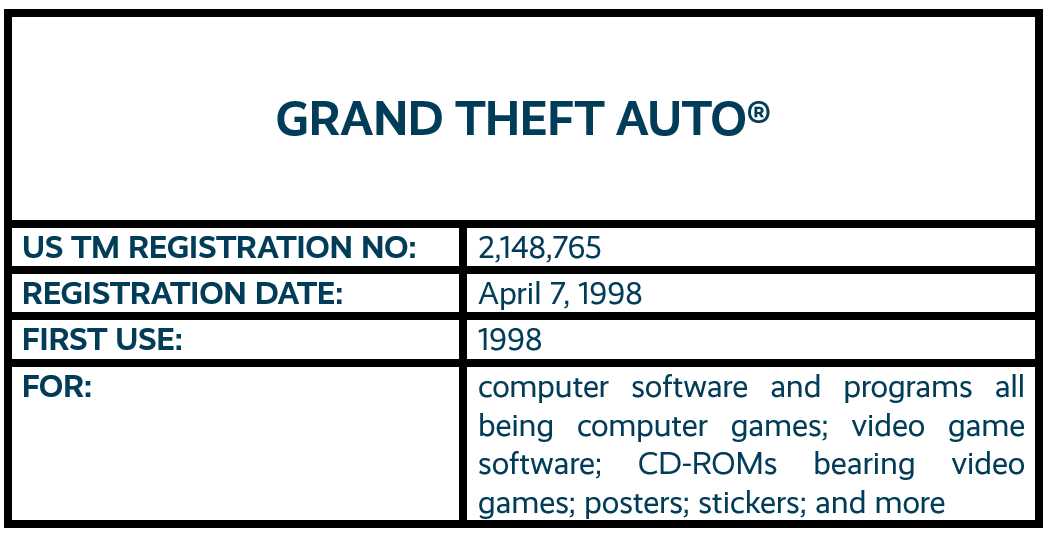
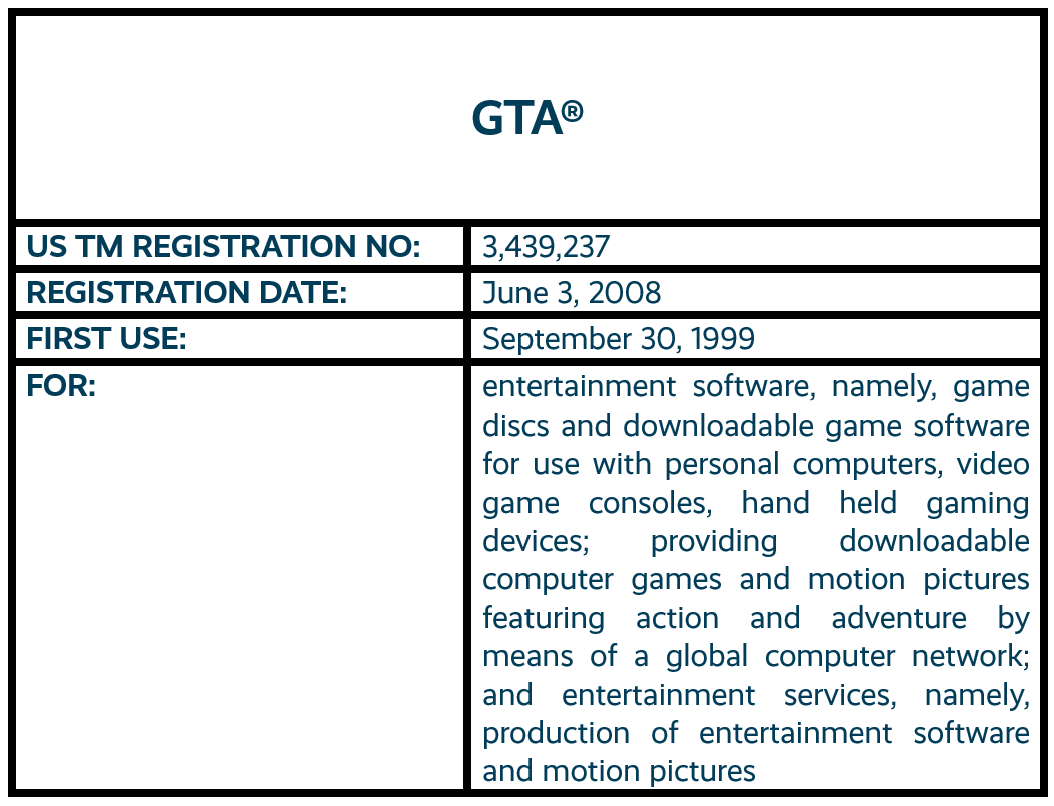
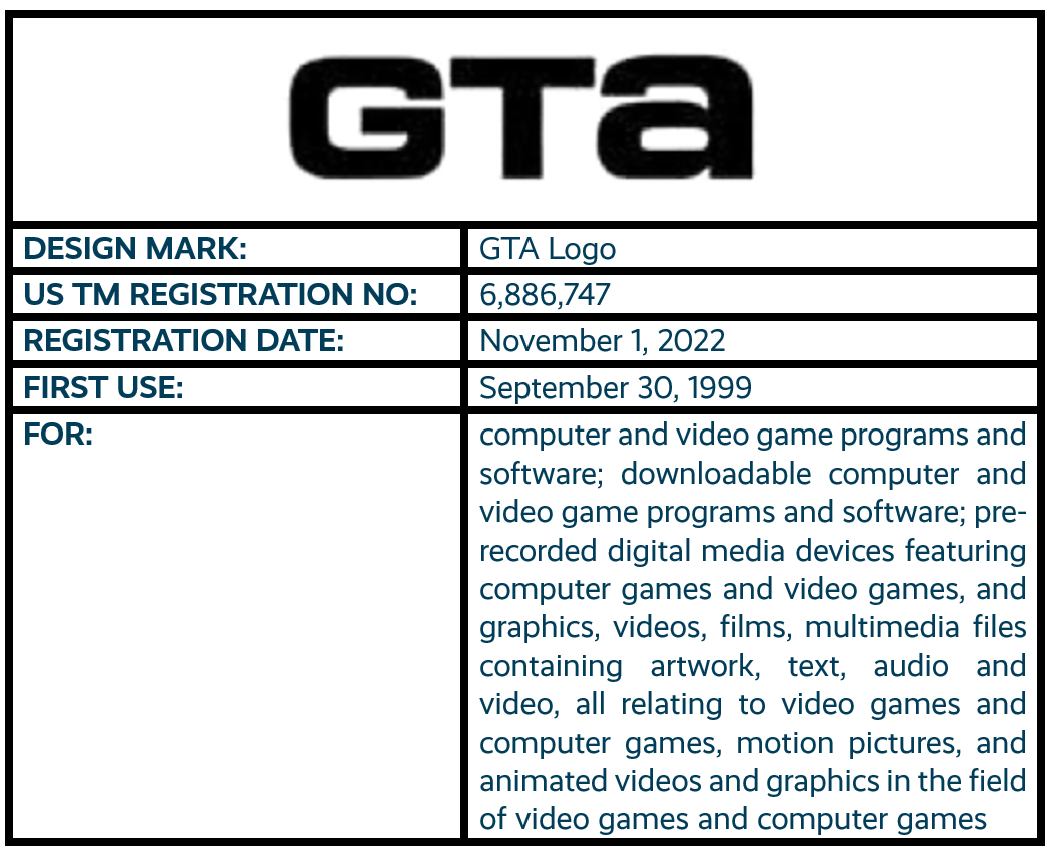
The GRAND THEFT AUTO® [4] franchise (or just GTA® [5] if you prefer) launched in 1997 (1998 in the US) with the release of the original game by DMA Design, a Scottish video game developer that would eventually become Rockstar North. Originally developed under the working title Race'n'Chase, the game featured a top-down, two-dimensional perspective in which players assumed the role of a criminal completing missions, stealing vehicles, and evading police across three fictional cities: Liberty City, Vice City, and San Andreas. Unlike most games of the time, which required players to follow a relatively linear path, Grand Theft Auto offered an open world where players could freely explore their surroundings and engage in criminal activities. The game's violent content quickly attracted criticism, but the controversy also helped generate publicity for the fledgling franchise.
The original game was followed by two London-themed expansion packs in 1999, set in 1969 and 1961, which remain the only entries in the franchise set outside the United States. Later that year, Rockstar Games released Grand Theft Auto 2, which retained the top-down perspective but introduced a futuristic setting called Anywhere City and a system of competing criminal gangs. Players could earn the respect of different gangs by completing missions, although helping one gang often meant angering another. While the early games established many of the franchise's defining features, including open-world gameplay, car theft, and police pursuits, the series had not yet achieved the widespread popularity that would come with its transition to three dimensions.
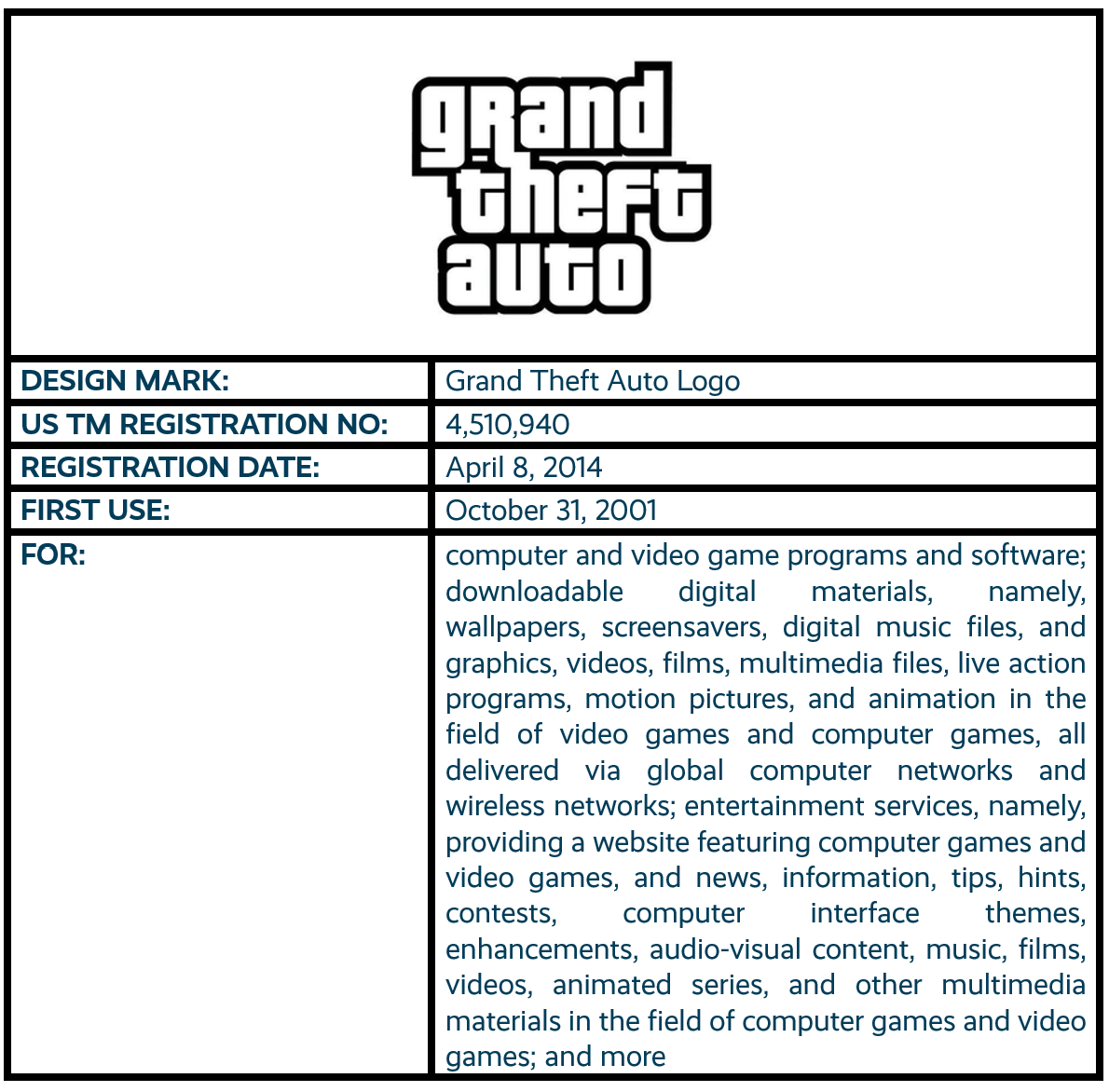
The Grand Theft Auto Logo [6] design mark was introduced in the very first game while the GTA Logo [7] design mark was introduced in a subsequent game. Both are still used for new games today!
Grand Theft Auto III (2001)
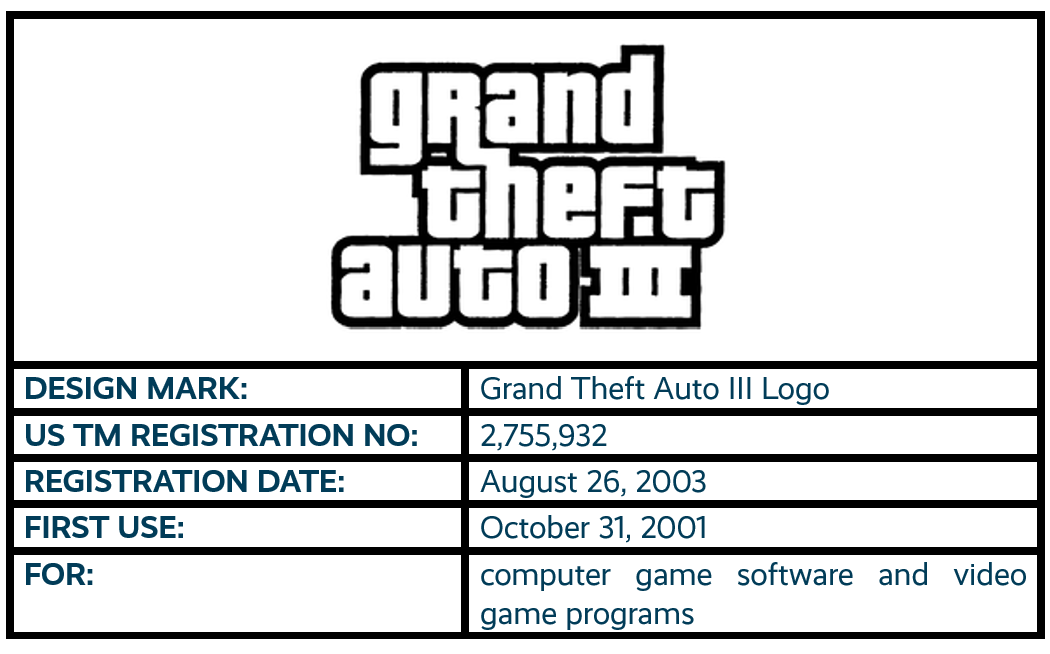
Released on October 22, 2001, Grand Theft Auto III (Grand Theft Auto Logo III Logo [8] design mark) fundamentally changed the franchise and helped redefine the open-world video game genre. Set in Liberty City, a fictional metropolis inspired by New York City, the game follows Claude, a silent criminal protagonist who is betrayed by his girlfriend during a bank robbery and subsequently becomes entangled with the city's various criminal organizations while seeking revenge. Unlike its predecessors, Grand Theft Auto III featured a fully three-dimensional environment, allowing players to explore a sprawling city from a third-person perspective. The game combined cinematic storytelling, memorable characters, and a remarkable degree of player freedom, establishing the formula that would define the franchise for decades.
Grand Theft Auto III was an immediate commercial and critical success, selling more than 14.5 million copies worldwide by 2008. Its detailed city featured pedestrians, traffic, competing criminal gangs, and an assortment of radio stations that played music and fictional advertisements while players drove through the city. The game also generated substantial controversy over its violent content, particularly the ability to engage in criminal activities unrelated to the main storyline. Despite the criticism, Grand Theft Auto III is widely regarded as one of the most influential video games ever released, helping popularize the modern three-dimensional open-world genre.
Grand Theft Auto: Vice City (2002)
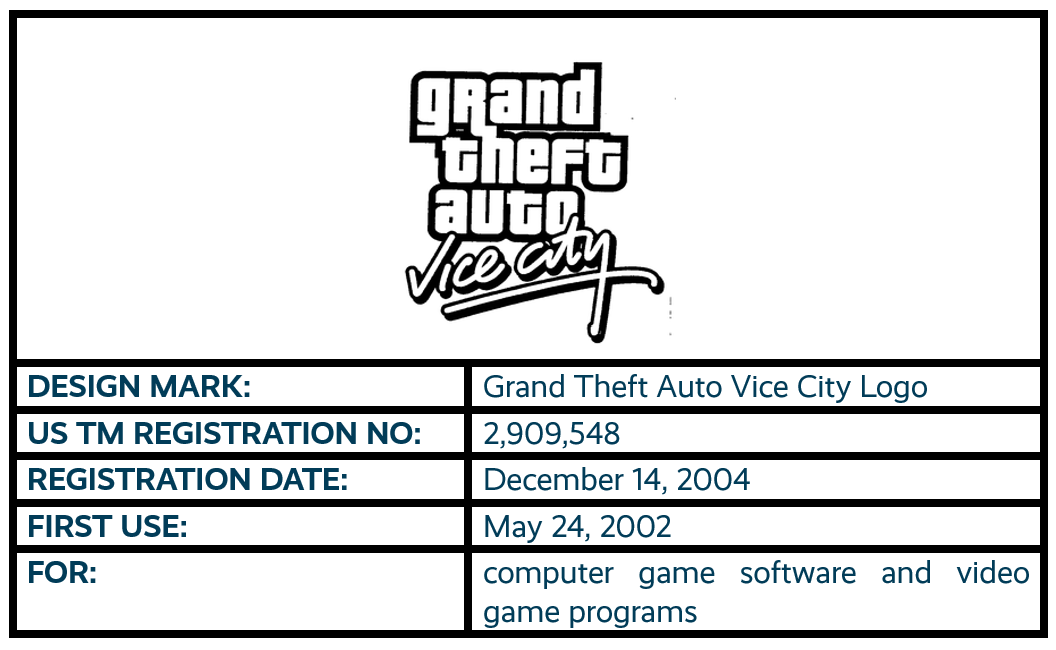
Following the success of Grand Theft Auto III, Rockstar Games released Grand Theft Auto: Vice City (Grand Theft Auto Logo Vice City Logo [9] design mark) on October 29, 2002, transporting players to a fictionalized version of Miami during the 1980s. The game follows Tommy Vercetti, a former mobster who arrives in Vice City after serving 15 years in prison, only to become involved in a drug deal gone wrong. Voiced by actor Ray Liotta, Tommy gradually builds his own criminal empire while navigating conflicts between drug dealers, organized crime families, and other criminal organizations. Heavily influenced by the television series Miami Vice and the film Scarface, the game embraced the fashion, music, architecture, and excess of 1980s Miami.
Vice City expanded upon its predecessor by introducing motorcycles, flyable helicopters, and the ability to purchase properties and businesses throughout the city. Its soundtrack, featuring an extensive collection of popular 1980s music, became one of the game's most celebrated features and helped establish a distinctive atmosphere that set it apart from Grand Theft Auto III. By 2008, Vice City had sold more than 17.5 million copies worldwide, surpassing its predecessor.
Grand Theft Auto: San Andreas (2004)
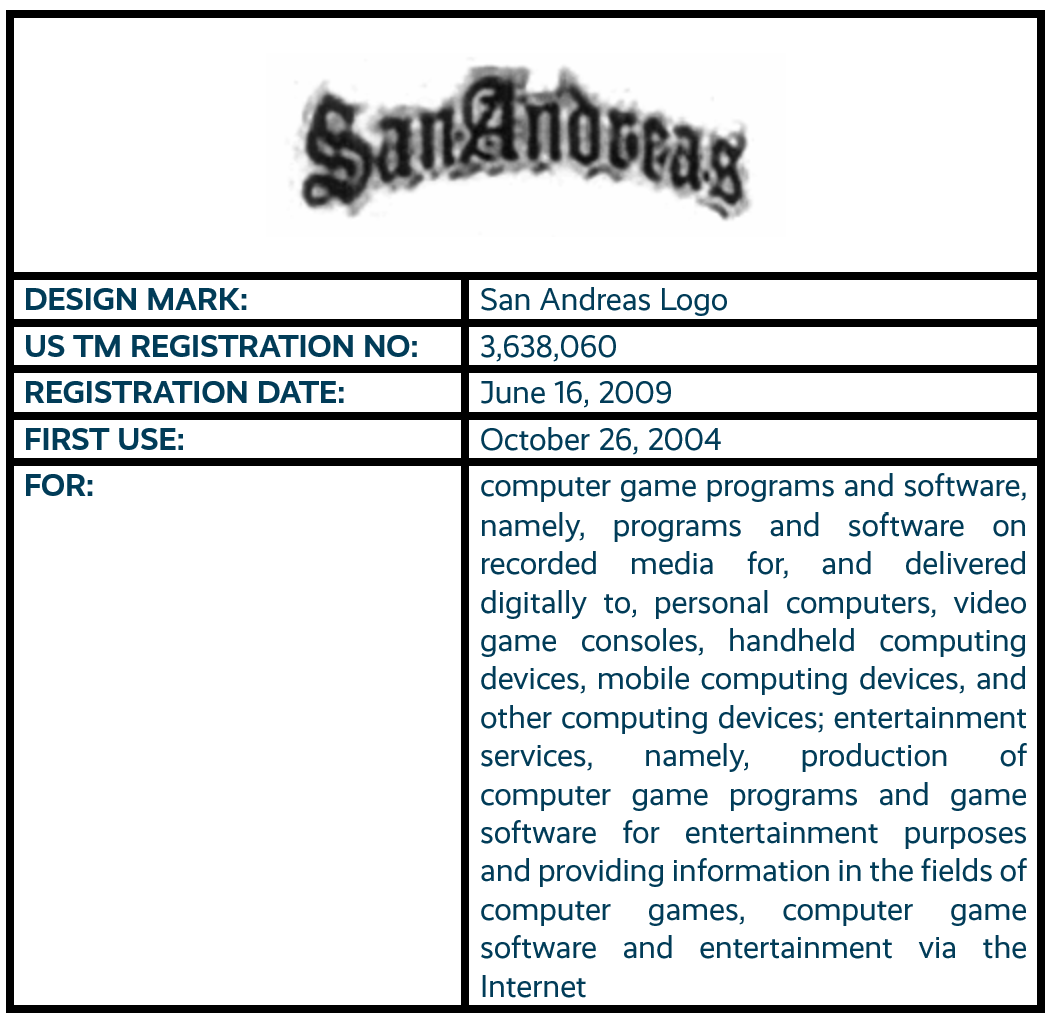
Released on October 26, 2004, Grand Theft Auto: San Andreas expanded the franchise beyond a single city, introducing an entire fictional state inspired by California and Nevada. Set in 1992, the game follows Carl "CJ" Johnson, a former gang member who returns to his hometown of Los Santos following his mother's murder, only to become entangled in gang warfare, police corruption, and organized crime. The game's enormous open world featured three major cities: Los Santos (Los Angeles), San Fierro (San Francisco), and Las Venturas (Las Vegas), connected by sprawling deserts, mountains, forests, and small towns. Drawing inspiration from West Coast hip-hop culture and early 1990s crime films, San Andreas also featured an extensive cast of voice actors, including Samuel L. Jackson, James Woods, and Peter Fonda.
San Andreas introduced numerous gameplay features that expanded upon its predecessors, including swimming, character customization, gang territory battles, and the ability to improve CJ's physical attributes through exercise and diet. Players could even make CJ overweight by eating too much fast food! The game was an enormous commercial success, selling more than 27.5 million copies worldwide by 2011 and becoming the best-selling PlayStation 2 game of all time. However, it also generated one of the industry's biggest controversies in 2005 when players discovered hidden sexual content through a modification known as "Hot Coffee." The discovery prompted the Entertainment Software Rating Board (ESRB) to temporarily change the game's rating from Mature (M) to Adults Only (AO), resulting in its removal from several major retailers until Rockstar released a modified version. Despite the controversy, San Andreas remains one of the franchise's most celebrated and influential installments.
Interestingly, San Andreas is the only game for which the complete Grand Theft Auto logo is not registered for. Only the San Andreas Logo [10] design mark is currently a registered trademark.
Grand Theft Auto IV (2008)
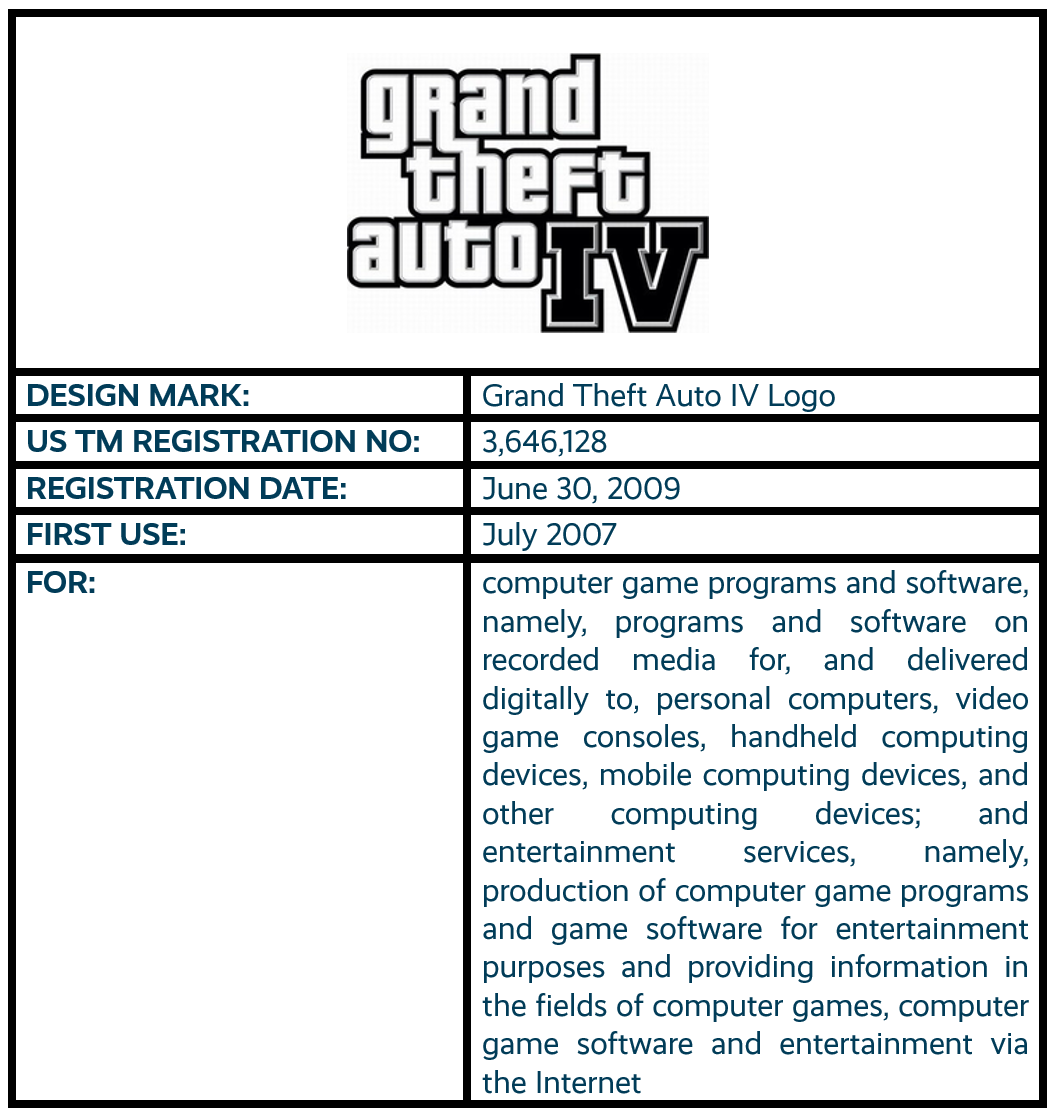
Released on April 29, 2008, Grand Theft Auto IV (Grand Theft Auto Logo IV Logo [11] design mark) marked the franchise's transition to the PlayStation 3 and Xbox 360 generation of consoles. The game follows Niko Bellic, an Eastern European immigrant who arrives in Liberty City hoping to escape his troubled past and pursue the American Dream, only to become involved in the city's criminal underworld. Unlike the increasingly extravagant storylines of earlier games, Grand Theft Auto IV adopted a darker, more realistic tone, exploring themes of immigration, betrayal, organized crime, and the challenges of building a new life in America. The game also introduced a substantially redesigned Liberty City, featuring more realistic physics, improved artificial intelligence, and a more detailed urban environment.
Grand Theft Auto IV was another enormous commercial success, generating approximately $500 million in retail sales and selling more than six million copies during its first week alone. By 2013, worldwide sales had reached approximately 25 million copies. The game was particularly praised for its realistic physics system, cinematic storytelling, and the depth of its characters, while its multiplayer features allowed players to explore Liberty City together. Rockstar subsequently released two story expansions, The Lost and Damned and The Ballad of Gay Tony, which told overlapping stories from the perspectives of additional characters.
Grand Theft Auto V (2013)
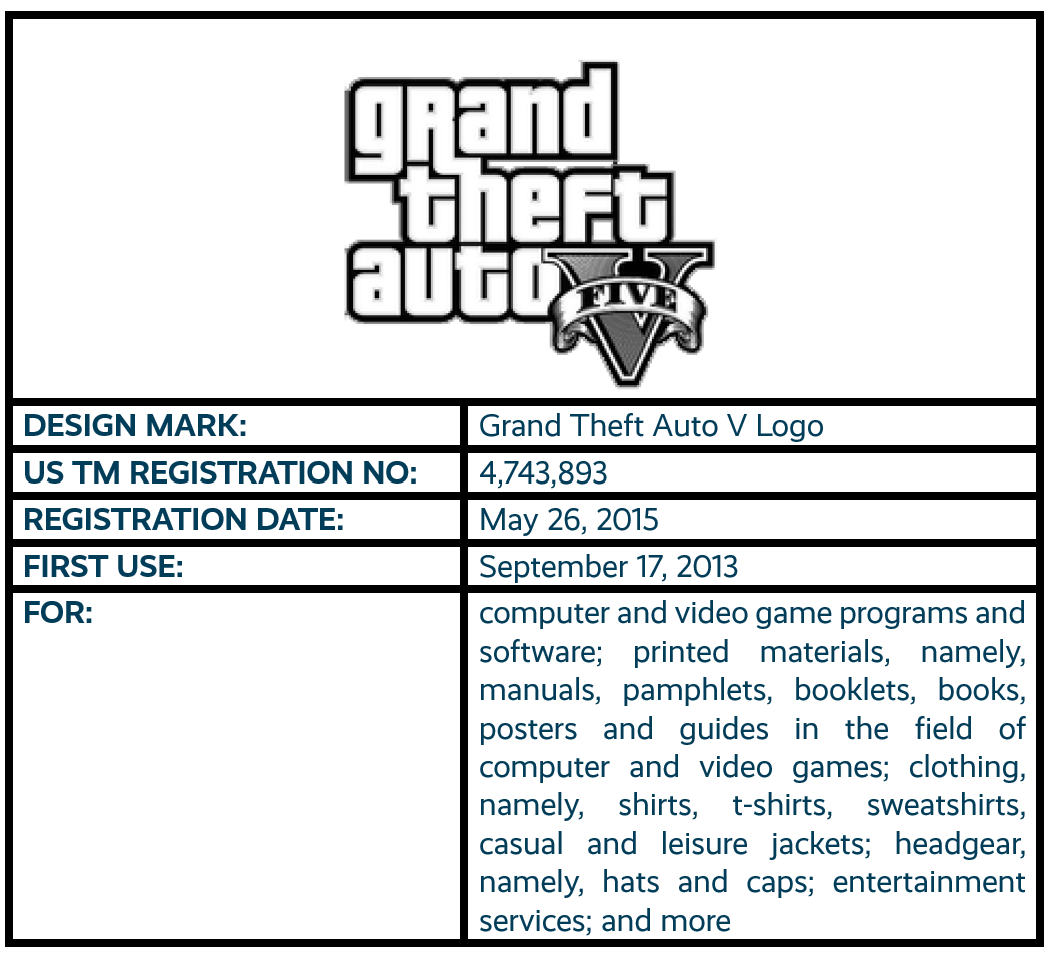
Released on September 17, 2013, Grand Theft Auto V (Grand Theft Auto Logo V Logo [12] design mark) returned the franchise to Los Santos, a fictional city inspired by Los Angeles, and the surrounding state of San Andreas. For the first time in the main three-dimensional series, the game featured three playable protagonists: Michael De Santa, a retired bank robber living under government protection; Franklin Clinton, a young criminal hoping to improve his circumstances; and Trevor Philips, an unpredictable career criminal with a violent past. Players could switch between the three characters throughout the game, experiencing interconnected storylines that eventually culminated in a series of elaborate criminal heists. The game also featured one of the largest and most detailed open worlds of its time, complete with mountains, deserts, beaches, and a sprawling urban landscape.
Grand Theft Auto V shattered entertainment industry records upon its release, generating more than $800 million in retail sales during its first 24 hours and surpassing $1 billion within just three days. The game's popularity was further extended by Grand Theft Auto Online, a multiplayer experience launched in October 2013 that allowed players to build criminal enterprises, complete heists, and interact with others in a continuously evolving online world. Rockstar continued supporting and rereleasing the game across three console generations, helping it remain commercially successful for more than a decade. As of November 2026, Grand Theft Auto V had sold nearly 235 million copies worldwide, making it one of the best-selling video games in history.
Grand Theft Auto VI (2026)
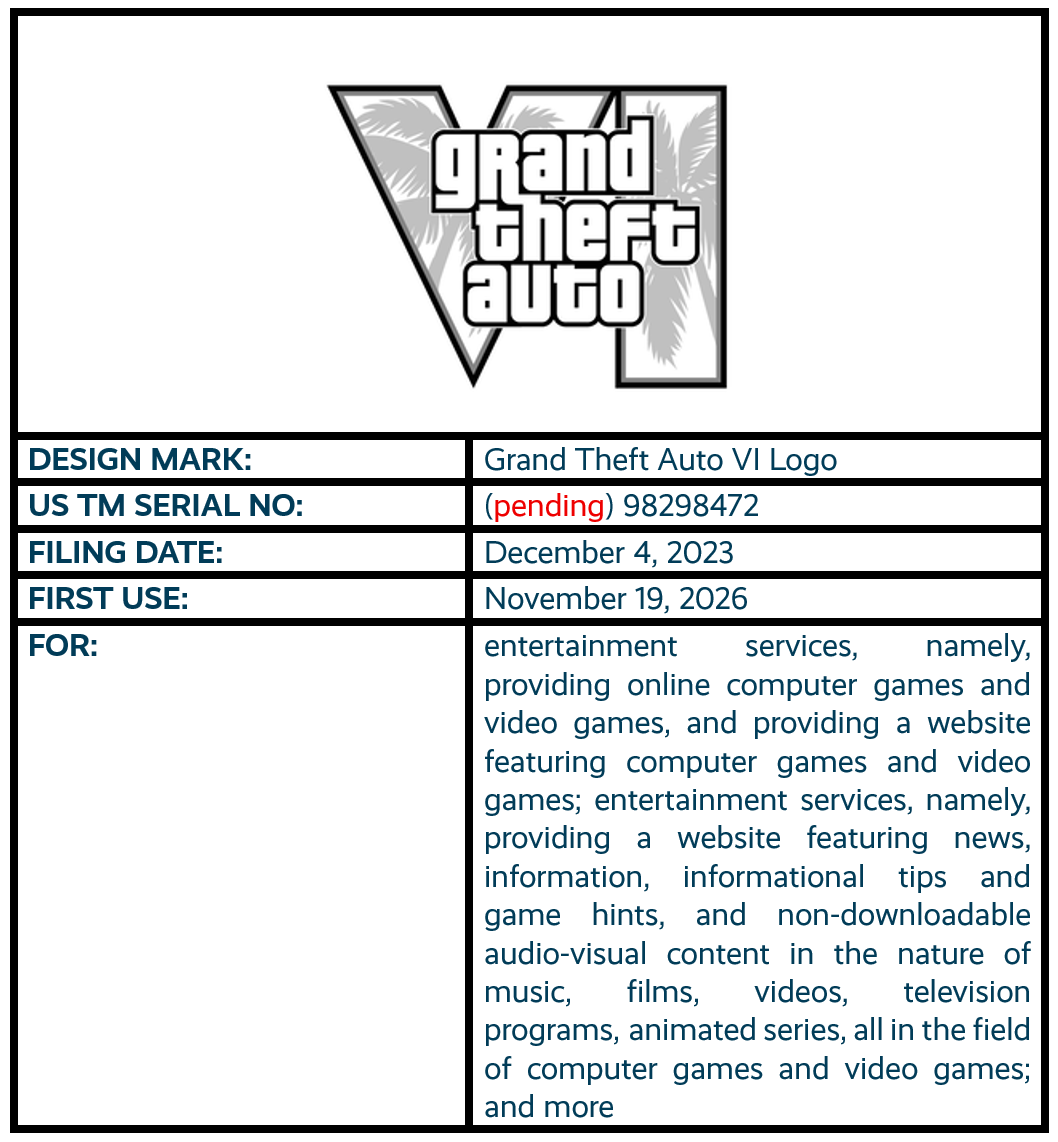
After more than 13 years, the franchise finally returned with the release of Grand Theft Auto VI on November 19, 2026, for the PlayStation 5 and Xbox Series X/S. The game returns players to Vice City, now part of the fictional state of Leonida, which draws inspiration from modern-day Florida. Its story follows Lucia Caminos and Jason Duval, a criminal couple whose involvement in a robbery gone wrong lead them into a larger conspiracy spanning the state. The game also marks the first time since the franchise's original two-dimensional era that a woman has served as a playable protagonist in a mainline Grand Theft Auto game. Nearly a quarter-century after Vice City introduced players to its neon-lit version of 1980s Miami, Grand Theft Auto VI reimagines the setting for the modern era, incorporating contemporary technology, social media culture, and Florida's distinctive landscapes.
Anticipation for Grand Theft Auto VI reached extraordinary levels during its lengthy development, with the game's first trailer debuting in December 2023, followed by additional trailers and promotional materials in 2025 and 2026. The game ultimately delivered one of the largest entertainment launches in history, with Rockstar reportedly recording 32.5 million copies sold before release and an extraordinary $3.79 billion in worldwide retail sales on its first day alone. It also debuted to exceptional critical acclaim, earning a reported score of 99 on Metacritic. The release represents a remarkable milestone for a franchise that began nearly three decades earlier as a relatively simple two-dimensional crime simulator.
Take-Two has a huge variety of pending design mark applications ready for the release of Grand Theft Auto VI (all the applications are allowed, just not registered yet while awaiting the game release, including the primary Grand Theft Auto Logo VI Logo [13] design mark.
Copyright © 2026 by Illustrated IP, LLC. All rights reserved.
[1] Take-Two Games, https://www.take2games.com/; Rockstar Games, https://www.rockstargames.com/.
[2] USPTO, U.S. Trademark Registration No. 4,510,940, available at https://tsdr.uspto.gov/#caseNumber=86124384&caseSearchType=US_APPLICATION&caseType=DEFAULT&searchType=statusSearch.
[3] GTA VI Could Cost US Businesses $1 Billion in Lost Productivity, NEWSWEEK, pubished November 18, 2026, and available at https://www.newsweek.com/gta-vi-could-cost-us-businesses-1-billion-in-lost-productivity-12732698; A Complete History Of Grand Theft Auto: The Game That Was Three Decades In The Making, SKY HISTORY, available at https://www.history.co.uk/articles/grand-theft-auto-history; 10 Grand Theft Auto milestones, from a Scottish studio's 1997 original to GTA 6, QUARTZ., lasted updated November 17, 2026, and available at https://qz.com/grand-theft-auto-history-1997-gta-6#10-grand-theft-auto-milestones-from-a-scottish-studios-1997-original-to-gta-6; akers of Grand Theft Auto: San Andreas Settle FTC Charges, FTC, posted June 8, 2006, and available at https://www.ftc.gov/news-events/news/press-releases/2006/06/makers-grand-theft-auto-san-andreas-settle-ftc-charges.
[4] USPTO, U.S. Trademark Registration No. 2,148,765, available at https://tsdr.uspto.gov/#caseNumber=2,148,765&caseSearchType=US_APPLICATION&caseType=DEFAULT&searchType=statusSearch.
[5] USPTO, U.S. Trademark Registration No. 3,439,237, available at https://tsdr.uspto.gov/#caseNumber=77144006&caseSearchType=US_APPLICATION&caseType=DEFAULT&searchType=statusSearch.
[6] Id. at 2.
[7] USPTO, U.S. Trademark Registration No. 6,886,747, available at https://tsdr.uspto.gov/#caseNumber=87784380&caseSearchType=US_APPLICATION&caseType=DEFAULT&searchType=statusSearch.
[8] USPTO, U.S. Trademark Registration No. 2,755,932, available at https://tsdr.uspto.gov/#caseNumber=76468228&caseSearchType=US_APPLICATION&caseType=DEFAULT&searchType=statusSearch.
[9] USPTO, U.S. Trademark Registration No. 2,909,548, available at https://tsdr.uspto.gov/#caseNumber=76468229&caseSearchType=US_APPLICATION&caseType=DEFAULT&searchType=statusSearch.
[10] USPTO, U.S. Trademark Registration No. 3,638,060, available at https://tsdr.uspto.gov/#caseNumber=77531142&caseSearchType=US_APPLICATION&caseType=DEFAULT&searchType=statusSearch.
[11] USPTO, U.S. Trademark Registration No. 3,646,128, available at https://tsdr.uspto.gov/#caseNumber=77524069&caseSearchType=US_APPLICATION&caseType=DEFAULT&searchType=statusSearch.
[12] USPTO, U.S. Trademark Registration No. 4,743,893, available at https://tsdr.uspto.gov/#caseNumber=85463985&caseSearchType=US_APPLICATION&caseType=DEFAULT&searchType=statusSearch.
[13] USPTO, U.S. Trademark Serial No. 98298472, available at https://tsdr.uspto.gov/#caseNumber=98298472&caseSearchType=US_APPLICATION&caseType=DEFAULT&searchType=statusSearch.